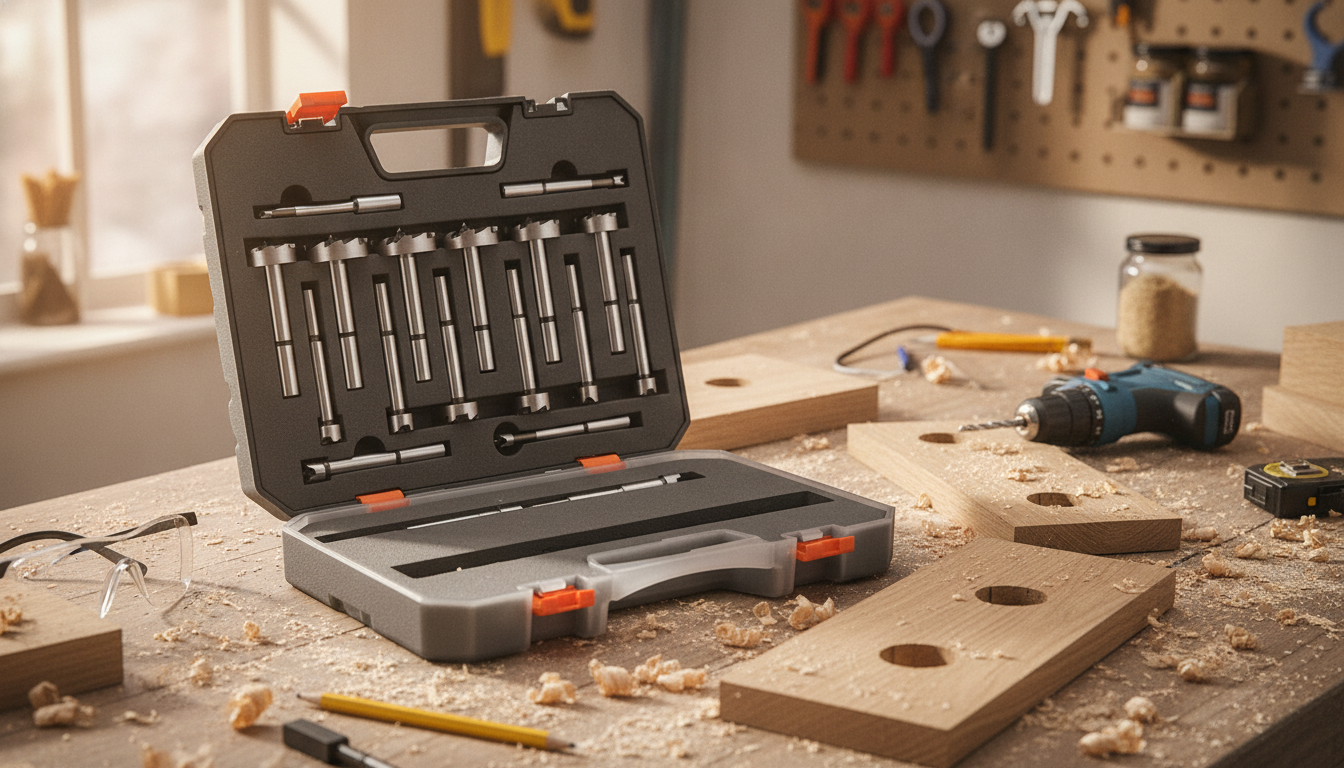
Forstner bits are built for precise woodworking—boring smooth, flat-bottom holes with clean edges for hinges, joinery, and hardware. A multi-size set makes it easier to match common project needs without buying individual bits, while consistent cutting geometry helps reduce tear-out and wandering. If clean recesses and crisp rims matter for your cabinets, jigs, or furniture parts, a dedicated Forstner set is one of the simplest upgrades for better-looking results. For more guidance, see Forstner Bit Recommendations.
A Forstner bit is designed to cut a clean circular rim first, then shave the material inside that circle—creating a flat-bottom hole rather than the cone-shaped bottom you’ll see from many twist bits. That shape is especially useful when hardware must sit flush, or when you want a neat-looking recess that won’t be hidden. For further reading, see HARFINGTON Forstner Drill Bits 15/16 inch / 24mm Round Shank 9 ….
For deeper technique guidance and examples of cleaner boring methods, resources like Fine Woodworking are a solid reference for shop-proven drilling practices.
A set is most useful when it covers the “everyday” diameters you actually reach for in cabinetry and general woodworking—small holes for jigs, mid sizes for pass-throughs and recesses, and larger sizes for hinge cups and hardware pockets.
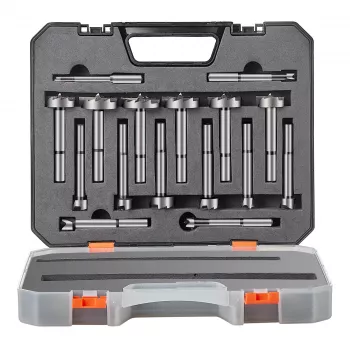
If you’re ready to stock your shop with a multi-size set, the 16PCS Forstner Bit Set is an easy way to cover common diameters without hunting down individual bits. For additional product and usage overview across Forstner designs, Bosch Professional is a helpful starting point.
Choosing the right diameter is mostly about matching the hardware spec (hinge cup size, grommet size, bushing diameter) or the exact recess you want. Where Forstner bits really shine is partial-depth boring: a clean rim plus a flat floor makes hardware sit better and looks more professional when the hole is visible.
| Diameter range | Typical uses | Depth notes |
|---|---|---|
| 10–15 mm | Small recesses, dowel-related tasks, jig holes | Shallow to moderate depths; clear chips often |
| 16–25 mm | Cable pass-throughs, small cups, medium recesses | Use moderate speed; back the bit out to cool |
| 26–35 mm | Hardware recesses, larger plugs, template work | Clamp workpiece firmly to prevent grabbing |
| 35 mm | Concealed cabinet hinge cups (common size) | Best with a depth stop or marked target depth |
| 38–50+ mm | Larger recesses, decorative insets, big pass-throughs | Lower speed; prioritize chip evacuation and control |
Forstner bits can run in a drill press or a handheld drill, but setup is what separates “good enough” from truly clean work. The bigger the bit, the more important control becomes.
If you’re drilling multiple identical recesses (like hinge cups across several doors), a drill press with a fence and stop block makes the work faster and more consistent than freehand drilling.
Clean holes come from a simple sequence: establish the rim cut, manage chips and heat, and support the fibers on the way out. Small adjustments—especially speed—often fix the common problems.
Yes. Use low speed, keep the drill as square as possible to the surface, clamp the workpiece securely, and start gently so the rim can score the circle before you feed deeper.
Burning is usually caused by RPM that’s too high, dull edges, or chips packing in the hole. Lower the speed, back the bit out to clear chips often, and clean any resin buildup so the cutter can slice instead of rub.
Clamp a sacrificial backer board behind the workpiece to support the fibers as the bit exits. For extra control, stop just before breakthrough and finish from the opposite face using the center point as a guide.





Leave a comment