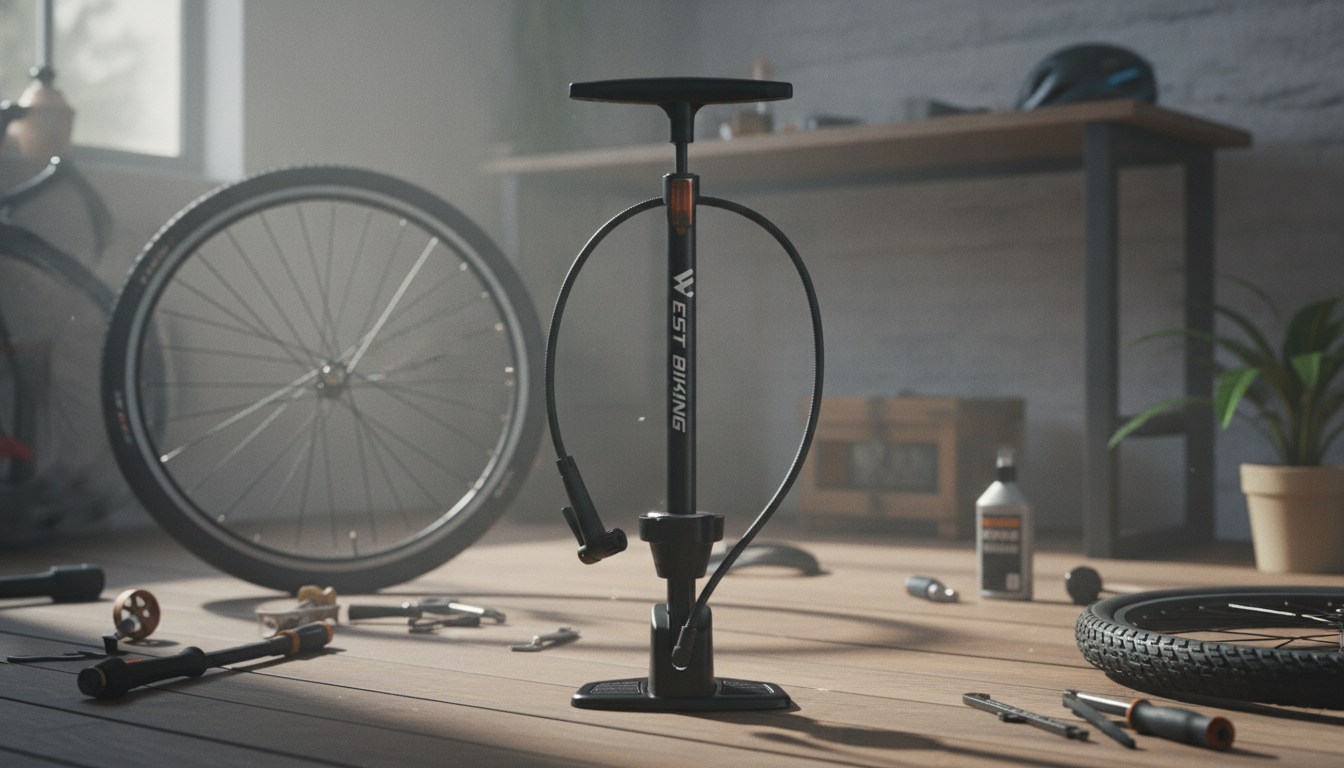
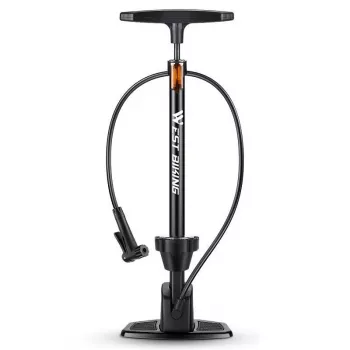
Consistent tire pressure improves speed, comfort, and puncture resistance—but only if it’s easy to hit the right PSI every time. A stable floor pump with a readable gauge and valve compatibility for both Presta and Schrader makes quick top-offs simple for road, gravel, mountain, hybrid, and commuter bikes. With a high-pressure design, you can move from “probably close” to “repeatably right” in a minute or two before rolling out. For more guidance, see Birzman Zacoo Maha III – Cycling News | Bike Reviews | road.cc.
A quality floor pump changes tire maintenance from an occasional chore to a quick routine. Compared with compact hand pumps, a full-size barrel and base make it easier to inflate quickly and reach higher pressures without fighting the pump. For further reading, see Group test: Choose the best portable cycle pumps – Cycling UK.
For riders who switch between bikes or wheelsets, a dual-valve pump reduces friction: fewer adapters to misplace and fewer “why is it leaking?” moments in the garage.
Pressure isn’t just a number—it’s handling, traction, and reliability. A gauge helps avoid common problems from underinflation (pinch flats, vague cornering, squirmy feel) and overinflation (a harsh ride and reduced grip on rough surfaces).
If you’re unsure how valve types differ, Park Tool’s valve basics are a reliable reference: Park Tool — Presta and Schrader Valves.
Valve compatibility is where convenience becomes confidence. Presta valves are common on road bikes and many gravel wheels, while Schrader valves are common on hybrids and many entry-level bikes (and feel like car tire valves).
Small technique details matter: keeping the head straight prevents side-loading the valve stem, and locking the chuck fully reduces “hissing” while you pump.
Not all floor pumps feel the same in daily use. The best ones prioritize stability, a legible gauge, and a secure chuck that doesn’t leak when you remove it.
| Feature | Why it helps | What to confirm |
|---|---|---|
| Valve compatibility | Works across multiple bikes | Fits Presta and Schrader without fiddly adapters |
| High-pressure capability | Supports road/gravel pressures | Maximum PSI is suitable for road tires |
| Gauge readability | More precise inflation | Large dial, clear numbers, easy viewing angle |
| Base stability | Faster pumping with less wobble | Wide footprint or non-slip base |
| Hose and head design | Less stress on valve stem | Secure lock and enough hose length |
A consistent process helps you land on the same pressure every time—especially useful when you’re dialing in comfort vs. speed.
For a pressure starting point tailored to rider weight and tire size, calculators can help narrow the range. One widely used tool is Silca — Tire Pressure Calculator, and Sheldon Brown’s guidance offers helpful context on tradeoffs: Sheldon Brown — Tire Pressure.
A dual-valve pump head is designed to seal on both valve types, so you can typically switch between Presta and Schrader without separate parts. Some pumps may still include an adapter for special cases, but everyday use should not require extra fittings.
Use the tire’s sidewall printed pressure range as your safe boundary, then choose a target within that range based on rider weight, tire width, terrain, and comfort vs. traction preferences. Staying consistent with the same pump and method helps you repeat the feel you like.
A small drop can happen due to minor air loss during removal and the hose/chuck volume equalizing as you disconnect. Remove the head quickly and straight, then re-check pressure and add a brief top-off if needed.





Leave a comment