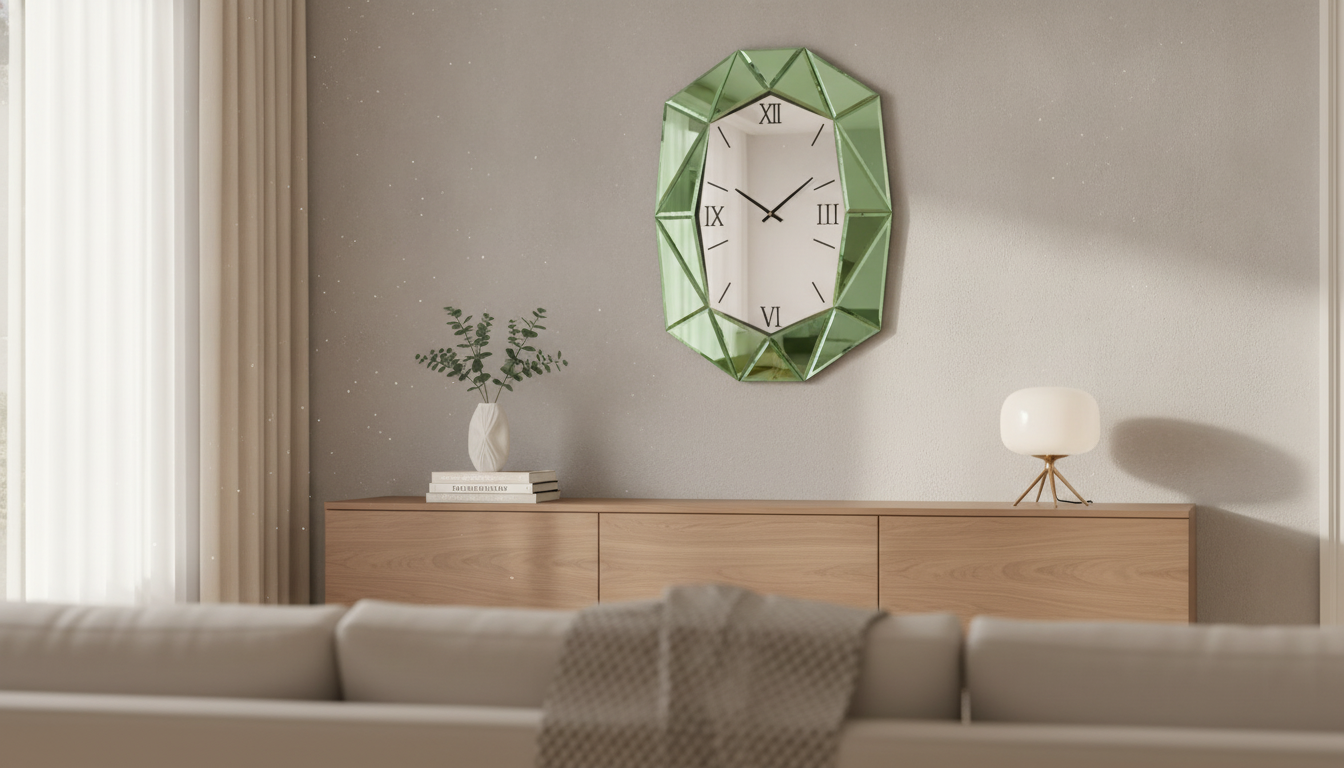
A mirrored wall clock can do double duty: keep time and elevate the room with light, depth, and texture. This irregular beveled design pairs reflective glass with classic Roman numerals and a quiet quartz mechanism, making it a strong choice for spaces that benefit from a statement piece without the distraction of ticking.
What Makes This Mirror Wall Clock Stand Out
- Irregular silhouette: The asymmetrical outline reads more sculptural than a standard round clock, bringing a curated, gallery-like feel to a blank wall.
- Beveled mirror edge: The angled perimeter catches and refracts light, adding dimension and a subtle “sparkle” effect that shifts as you move through the room.
- Roman numerals: Classic numerals add contrast and character, helping the clock complement traditional, transitional, and modern glam spaces.
- Silent quartz movement: A quiet mechanism supports bedrooms, nurseries, and home offices where even faint ticking can be distracting.
- Space-expanding reflection: Mirrored decor can visually open smaller areas by bouncing light and reflecting nearby textures and colors.
Where It Works Best in the Home
This style of mirrored clock shines in rooms where you want function without sacrificing finish. It can serve as the “anchor” for a wall arrangement or stand alone as a statement piece.
- Entryway: Creates an immediate focal point while staying practical for last-minute time checks.
- Living room: Pairs naturally with metallic accents, reflective accessories, and layered wall art.
- Bedroom: Silent movement helps keep the environment calm.
- Dining area: Reflections can amplify ambient lighting and candlelight for a warmer feel.
- Home office: Adds polish without adding noise—useful during calls and focused work blocks.
Placement Ideas and Styling Pairings
| Room |
Best Wall Position |
Pairs Well With |
Design Tip |
| Entryway |
Above a console or bench |
Mirrored tray, key bowl, slim lamp |
Keep nearby decor minimal so the beveled edge reads clearly |
| Living room |
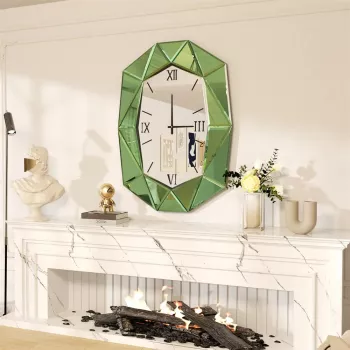
Over a sofa or mantle |
Brass accents, neutral textiles, glass vases |
Echo the Roman numerals with classic frames or typography art |
| Bedroom |
Across from a window or above a dresser |
Soft lighting, linen bedding, warm wood |
Avoid direct glare from bedside lamps by offsetting a few inches |
| Dining area |
On a main wall near a light fixture |
Candleholders, metallic flatware, centerpiece bowl |
Use dimmable lighting to enhance reflections without harsh hotspots |
Quiet Timekeeping: What “Silent Quartz” Means
Quartz clocks rely on a battery-powered oscillator to keep time consistently. For an overview of how time and frequency standards are defined, the U.S. National Institute of Standards and Technology (NIST) Time and Frequency resources are a useful reference point.
- Steady, low-maintenance operation: Quartz movement is designed for dependable everyday timekeeping with minimal upkeep beyond battery changes.
- Reduced audible ticking: “Silent” designs aim to eliminate the noticeable tick sound in typical room conditions, which is especially helpful for light sleepers and focus-heavy spaces.
- Best practices for quiet performance: Use a fresh, quality battery and mount the clock on a stable wall surface to minimize vibration or rattling.
- If accuracy drifts: Replace the battery first, then check that the hands aren’t touching the dial or each other (a common cause of intermittent sticking).
Mirror and Bevel Details That Change the Look
- Beveling adds a prismatic border: The angled edge creates a decorative “frame” that helps the clock read like wall art rather than purely functional hardware.
- Irregular outlines soften rigid rooms: In spaces full of rectangles—TVs, frames, cabinetry, shelving—the organic contour breaks up straight lines and makes the wall feel less predictable.
- Light becomes part of the design: Positioning near windows, sconces, or a chandelier can noticeably brighten the wall as reflections shift throughout the day.
- Roman numerals balance reflection: The numerals add structure and readability against the mirrored surface, so the clock still feels grounded and easy to scan.
Care, Cleaning, and Daily Use
A Simple Checklist Before Hanging
- Pick a height: Aim for the center of the clock around eye level when standing, then adjust based on furniture below it.
- Confirm glare: Check the wall at different times of day and with lights on/off to avoid harsh hotspots.
- Use appropriate hardware: Match anchors to wall type (drywall, plaster, masonry) and the clock’s weight. For general safety guidance around anchoring and stability, review the CPSC tip-over and anchoring resources.
- Align with nearby elements: Center above a console or dresser, or align with adjacent frames for a cohesive wall layout.
Product Snapshot
In-Stock Picks to Complete the Space
FAQ
Does a silent quartz wall clock make any ticking sound?
“Silent” typically means no noticeable ticking in normal room conditions, though extremely quiet spaces can sometimes reveal faint movement sounds. Using a fresh battery and mounting the clock securely on a stable wall helps keep operation as quiet as possible.
How do you clean a beveled mirror clock without streaks?
Dust first with a dry microfiber cloth, then wipe fingerprints using a lightly damp microfiber cloth or glass cleaner applied to the cloth. Finish with a dry buff to remove any remaining streaks, and avoid spraying cleaner directly into edges or seams.
Where should a mirrored wall clock be placed to avoid glare?
Check reflections in morning and evening light, then avoid placing it where direct sunbeams or uncovered bulbs hit the surface head-on. If glare is unavoidable, offset the clock slightly from the window line or adjust nearby lighting angles.
Recommended for you





Leave a comment