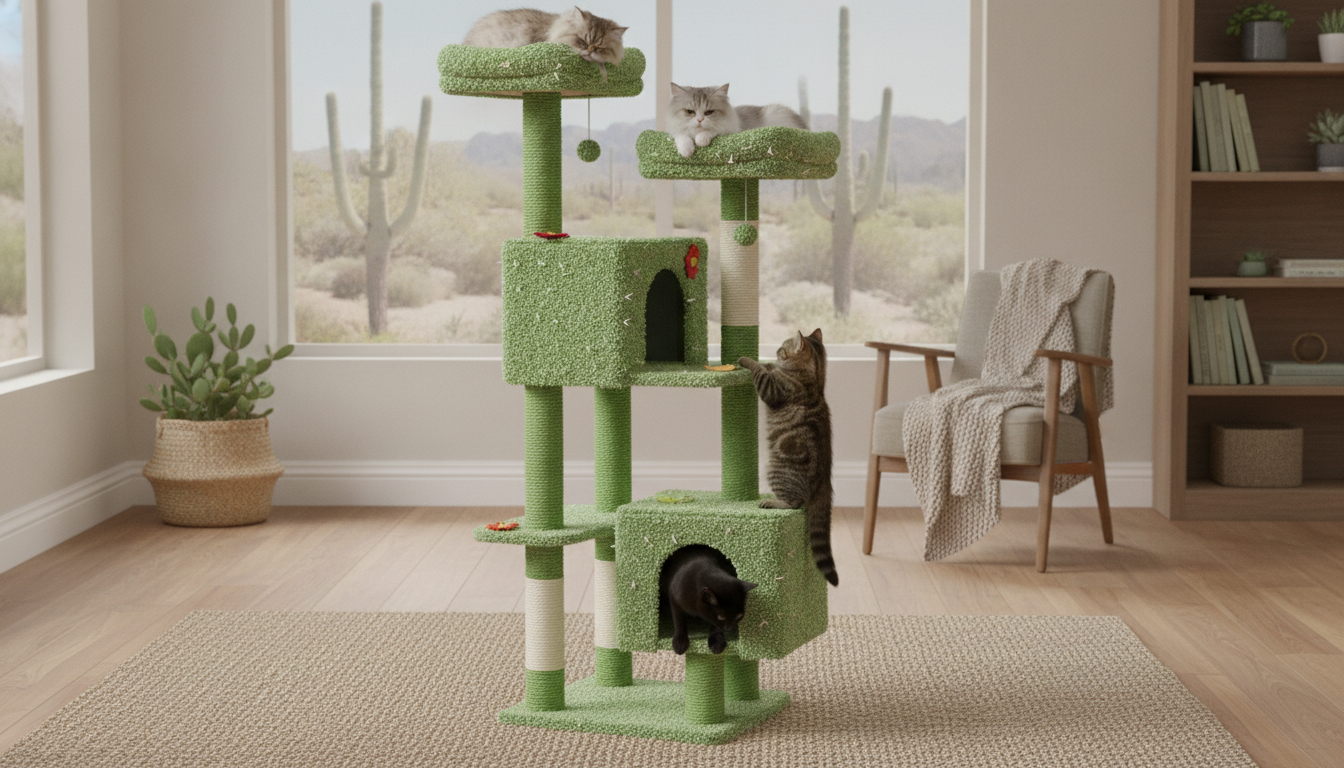
A multi-level cat tower can cover several everyday cat needs in one dedicated spot: climbing, resting, hiding, and scratching. The cactus-themed Cactus Cat Tree – 52″ Multi-Level Cat Tower with Perches, Condos & Scratching Posts creates vertical space that feels “owned” by your cat, which can reduce tension in busy homes and help redirect scratching away from sofas and chair legs. With elevated perches, enclosed condos, and scratch-friendly posts positioned along the climbing path, it supports natural routines—explore, perch, nap, repeat—without taking over the whole room. For more guidance, see The Importance of Cat Trees and the Evolution of Cat Furniture.
Cat behavior guidance often emphasizes “environmental enrichment” and giving cats appropriate outlets for normal behaviors like scratching and climbing. Resources such as the ASPCA’s overview of cat scratching behavior and the AAFP Feline Environmental Needs Guidelines reinforce how important designated scratching and perching areas can be for indoor cats. For further reading, see Eco-Friendly Cat Trees and Scratchers: Sustainable Options for ….
| Feature | What it provides | Why it matters day-to-day |
|---|---|---|
| Multi-level platforms | Climbing routes and varied resting heights | Adds exercise and gives cats options to spread out |
| Perches | Raised lounging and observation | Supports comfort and a sense of security |
| Enclosed condos | Private napping spots | Helps nervous cats settle and reduces overstimulation |
| Scratching posts | A dedicated place to scratch and stretch | Protects furniture and supports healthy claw habits |
| Single tower footprint | One consolidated cat zone | Keeps toys, fur, and scratching in a predictable area |
If your cat tends to avoid open beds but loves tucked-away spots (under chairs, behind curtains, inside closets), condos can become the “yes” space that prevents them from choosing hard-to-reach hiding places.
A helpful rule: put the tower where your cat already wants to be, then let the tower become the new habit. If the first placement doesn’t “take,” move it 3–6 feet at a time toward the favorite hangout until it gets consistent traffic.
If you’re working on furniture scratching, the Humane Society’s tips for preventing destructive scratching align well with a “make the right choice easy” setup—place the scratch surface where the habit already happens, then reward the new routine.
Cats are most likely to use posts that are stable (no wobble) and placed near where they already like to scratch, such as a sofa corner. Reward early use with treats or praise, and consider rubbing a little catnip or silvervine on the scratching surface if your cat responds to it.
It can work well when the design includes multiple perches and condos so cats can spread out at different heights. In larger multi-cat households, adding another resting spot or a second scratching station often reduces competition and helps everyone settle faster.
Place it near a window or in a social room where your cat already spends time, and keep it away from loud appliances that can be startling. Make sure there’s a clear jump zone, and if it’s being ignored, shift it closer to the cat’s favorite hangout area.




Leave a comment