
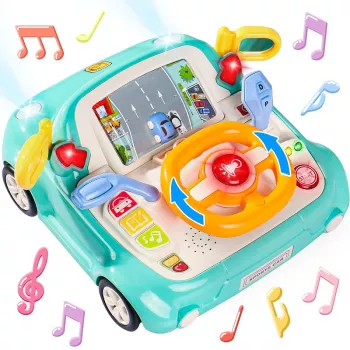
An interactive steering wheel toy adds hands-on pretend play to tummy time, stroller rides, and floor play. With buttons, sounds, lights, and simple cause-and-effect actions, it can help keep babies engaged while supporting early motor skills and attention. Whether your little one is “driving” across the living room or staying busy during a seated moment, a steering-wheel activity toy offers a familiar theme that many babies and toddlers quickly gravitate toward. For more guidance, see Baby and Toddler Milestones: 16 Actions with Objects by 16 Months.
Baby steering wheel toys are designed to look and feel like a real steering wheel, scaled down for small hands. Many include interactive buttons, sound effects, and light-up features to make pretend driving feel exciting and easy to understand. For further reading, see Musical Steering Wheel Toy for Baby & Kids – wallonica.org.
This “I do something, and the toy responds” feedback loop is a big part of the appeal—especially for babies who are just starting to explore how their actions can change the world around them.
Not all steering wheel toys are built the same. A few practical features can make a big difference in how enjoyable (and parent-friendly) the toy is day to day.
| What to check | Why it matters |
|---|---|
| Volume control or moderate default sound | Helps prevent overstimulation and makes it easier to use indoors |
| Simple cause-and-effect actions | Supports early learning and keeps frustration low |
| Smooth edges and sturdy build | Reduces risk of scratches and stands up to drops |
| Secure battery compartment | Improves safety around small parts |
| Easy to wipe clean | Useful for drool, snack residue, and everyday mess |
Interactive steering wheel toys fit naturally into short bursts of play, which is often exactly how babies learn best. When a child can press, turn, and hear a response, the toy becomes a mini practice station for early skills.
To align play with your child’s growth, it can help to keep an eye on age-appropriate developmental milestones from trusted references like the CDC developmental milestones. Every child develops at their own pace, but consistent opportunities for safe, hands-on exploration can support progress over time.
A steering wheel toy can grow with your child by shifting the way you play together—from simple exploration to early pretend-play storylines.
If you’re looking to add a pretend-driving favorite to your activity rotation, the Interactive Baby Steering Wheel Toy is a playful option designed to spark curiosity with interactive controls. It’s a strong choice for gifting, travel entertainment, or adding variety to a play corner where your child can practice pressing, turning, and listening.
To see current price, photos, and availability, visit the product page.
| Item | Details |
|---|---|
| Product | Interactive Baby Steering Wheel Toy |
| Price | 43.97 USD |
| Availability | In stock |
| Product page | https://farajstore1.com/interactive-baby-steering-wheel-toy/ |
Many interactive steering wheel toys work well from the later baby stage into the toddler years (often around 6 months through 2+ years), depending on button firmness, toy size, and features. Check the manufacturer’s recommended age range and use your child’s development and supervision needs as the deciding factors.
Volume varies by model, so it’s worth choosing one with a moderate default level or volume control when possible. If your baby seems startled or overstimulated, shorten play sessions, increase distance from the toy, or switch to quiet play.
Wipe the surface with a slightly damp cloth and mild soap, then dry it right away, avoiding moisture near openings and the battery compartment. Don’t soak electronic toys, and only remove batteries if the manufacturer recommends it for cleaning or storage.



Leave a comment