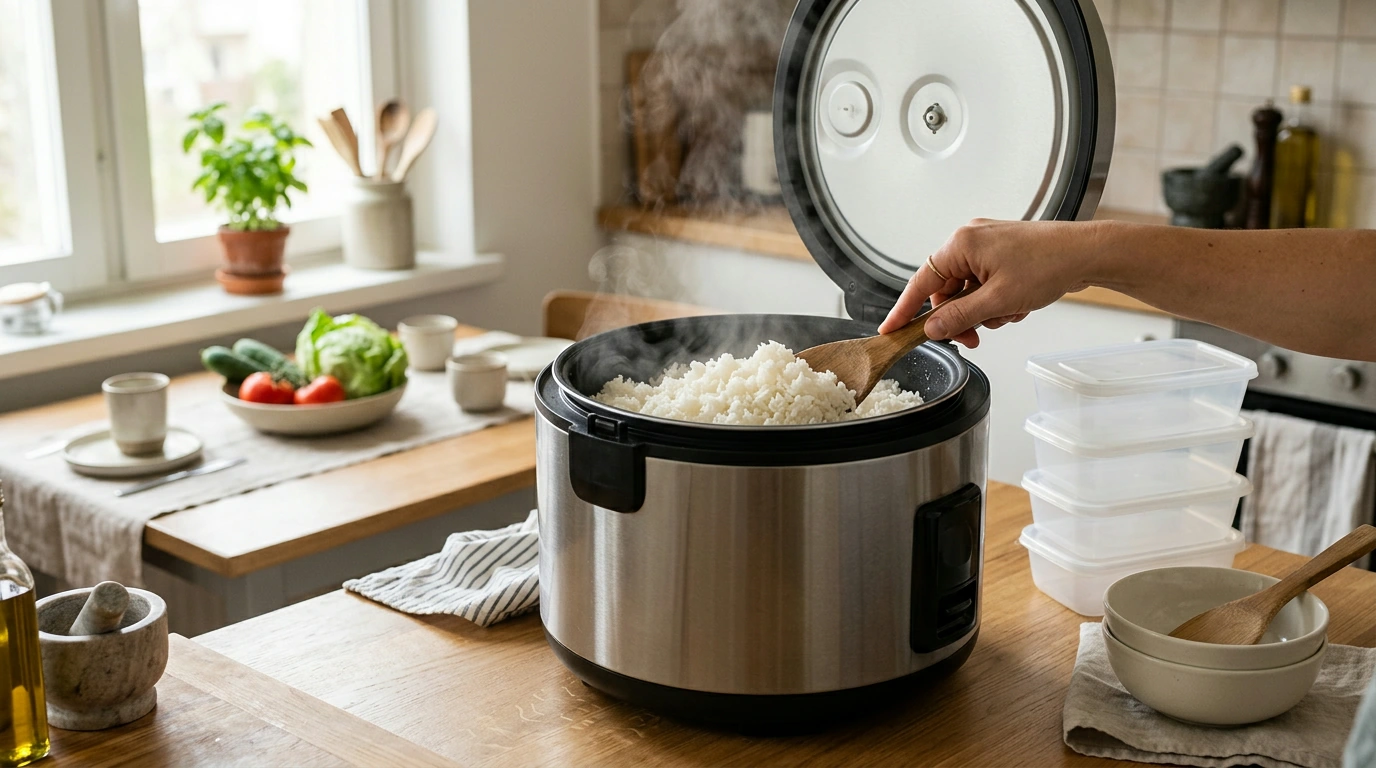
A rice cooker can take the guesswork out of making fluffy rice while freeing up stovetop space for the rest of the meal. For larger households, meal prep, or hosting, a bigger-capacity model helps cook consistent batches, keep rice warm for hours, and handle grains beyond white rice with less monitoring.
A large-capacity rice cooker is built to handle volume without the common pitfalls of big-pot stovetop rice. Instead of babysitting a burner and hoping the center cooks through before the bottom overcooks, you get steadier heat and more repeatable results.
Before choosing a model, think about your typical week: Are you cooking rice for multiple dinners, packing lunches, or feeding guests? A large rice cooker is a smart fit when “make extra” is the default.
| Feature | Why it matters | What to look for |
|---|---|---|
| Capacity | Determines how many servings can be cooked at once | A size that matches typical batch needs; room for expansion when hosting |
| Inner pot material | Affects sticking, durability, and cleanup | Nonstick for easy release; thicker pot for more even heating |
| Cook/warm controls | Keeps rice ready without over-drying too quickly | Clear cook indicator and reliable keep-warm function |
| Lid and steam vent | Controls moisture and reduces messy boil-overs | Secure lid, removable vent parts for cleaning if available |
| Cleaning effort | Impacts everyday usability | Removable inner lid/vent and a pot that rinses clean quickly |
If rice shows up on your table several times a week, stepping up to a bigger cooker can feel like upgrading your whole routine. The Large Rice Cooker is geared toward family-size cooking where you want a dependable batch and a warm hold that keeps dinner service flexible.
For households that rotate between white rice, brown rice, and mixed grains, a consistent cooker also makes it easier to dial in your preferred texture—so you’re not adjusting burner temperature mid-cook.
Even with a great appliance, small habits make a noticeable difference. Use these steps to reduce stickiness, prevent gummy texture, and keep grains tender but distinct.
One more tip for large-capacity pots: if you’re cooking a small batch, spread the rinsed rice evenly across the bottom before starting. A thin, uneven layer can cook less predictably than a fuller pot.
Cooked rice is convenient, but it’s also a food that benefits from careful handling. Treat leftovers like any other cooked grain: cool them promptly and store them correctly to keep quality high and reduce risk.
For practical storage guidance, the USDA FoodKeeper App is a helpful reference for refrigeration and leftover timelines, and the CDC food safety basics outline smart habits for handling cooked foods.
Cook an amount that matches your usual servings and never fill past the cooker’s marked maximum line. If you’re making a very small batch in a large pot, you may need a slight water adjustment to avoid dry or uneven texture.
Keep-warm is designed to hold rice at serving temperature, but how long it can be held well and safely depends on the appliance and its instructions. For leftovers, refrigerate promptly rather than letting rice sit out or cycling between cooling and reheating.
Common causes include too much water, skipping the rinse (extra surface starch), and not letting rice rest briefly after cooking. Stirring or compressing rice can also make it gummy, and very small batches in a large cooker may need fine-tuning.



Leave a comment