Twin Loft Bed: Desk, Wardrobe & Drawers in One
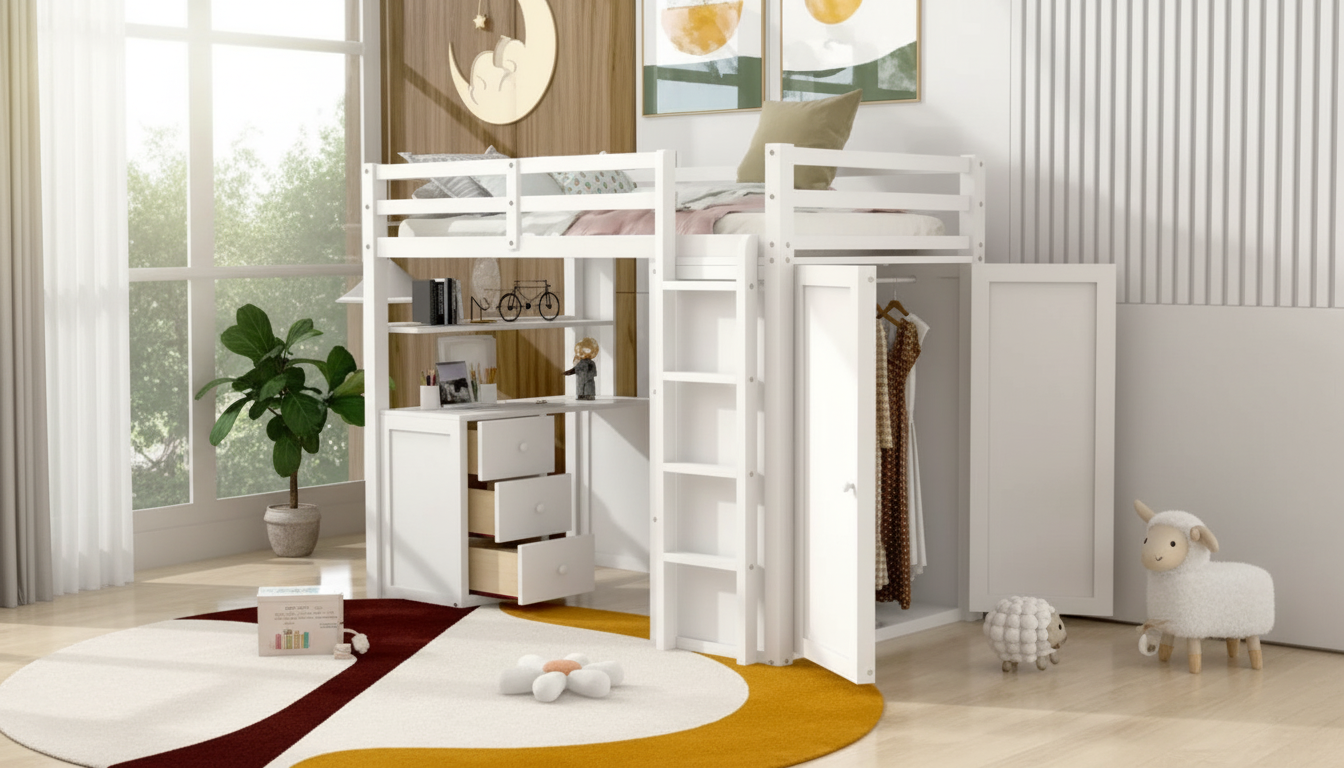
Twin Loft Bed with Desk, Wardrobe, and Storage Drawers
A loft bed that combines sleep, study, and storage can simplify a bedroom without sacrificing comfort. This twin loft setup places a desk, wardrobe space, and drawers into one footprint—helpful for kids’ rooms, teen spaces, and compact apartments where every square foot needs to work harder. Instead of spreading essentials across multiple bulky pieces, you get a single, cohesive layout that can feel calmer and easier to maintain day to day.
What this loft bed setup solves
- Creates a dedicated sleep zone up top and a work/storage zone below, so the room feels organized by function.
- Reduces the need for separate furniture pieces (bed frame, desk, dresser, wardrobe), freeing up open floor area.
- Helps keep clutter contained with drawers and closet-style storage for clothing, school supplies, and personal items.
- Supports routines by giving homework, clothes, and daily essentials a consistent home—less time searching, more time doing.
Key features to look for in a desk + wardrobe loft bed
Not all loft beds are built the same. When you’re choosing a twin loft bed with an integrated desk, wardrobe, and drawers, prioritize details that affect everyday use—especially stability, storage access, and comfort while studying.
- Guardrails and access: Look for full-length guardrails and a stable ladder (or stair-style access) for safer climbing.
- Desk proportions: A desk should have enough depth for a laptop plus writing space, with room for a task lamp without crowding.
- Wardrobe usability: A useful wardrobe includes a hanging area and/or shelves for folded items, so the space works for different clothing types.
- Drawer glide quality: Smooth slides and stop features help prevent drawers from pulling out unexpectedly during busy mornings.
- Weight limits: Confirm the top bunk and desk area limits in the product manual before use, especially for older kids and teens.
- Cleanable finish: A wipe-friendly surface matters in high-use rooms where fingerprints, scuffs, and spills happen.
Room planning and placement
Loft beds are space-savers, but only when they’re placed thoughtfully. A few quick measurements can prevent common frustrations like blocked doors, unusable drawers, or a desk that’s awkward to sit at.
- Measure wall-to-wall space and confirm door swing and closet access aren’t blocked.
- Plan for overhead clearance so sitting up in bed feels comfortable.
- Place the desk side where power outlets are easiest to reach for charging and lighting.
- Keep the ladder side clear of rugs that slip; use a low-profile non-slip mat if needed.
- Avoid placing the loft directly under ceiling fans or hanging light fixtures.
Quick fit checks before buying
| Check | What to measure | Recommended minimum |
|---|---|---|
| Ceiling clearance | Floor to ceiling height | Enough space to sit up comfortably on the top bunk |
| Walkway space | Open floor area beside ladder/entry | A clear path for safe climbing and getting in/out |
| Desk usability | Desk depth/width vs. chair space | Room for chair push-in and leg clearance |
| Drawer access | Drawer pull-out path | Full extension without hitting walls or other furniture |
| Wardrobe door clearance | Door swing or sliding path | Opens fully without obstruction |
Safety and durability essentials
A loft bed is a daily-use item, so safety habits and solid construction details matter as much as style. For general bunk and loft safety guidance, review the CPSC bunk bed safety information and the ASTM F1427 bunk bed safety specification.
- Use a mattress thickness that keeps the top of the mattress below the guardrail height for safer sleep.
- Tighten bolts after initial assembly and re-check periodically, especially during the first few weeks of use.
- Teach kids to use the ladder one at a time and avoid jumping from the top bunk.
- Keep the area around the bed free of hard toys or items that can become tripping hazards.
- Follow manufacturer age guidance for top-bunk use and always use the full guardrail system.
Making the desk-and-wardrobe zone work better
The biggest advantage of a desk + wardrobe loft bed is how quickly a room can shift from “messy” to “managed” with a few small add-ons and habits.
Product options in stock
- Twin Loft Bed with Desk, Wardrobe, and Storage Drawers: Combines sleeping, studying, and clothing storage into one cohesive frame for a more streamlined room layout—especially helpful where a separate desk and dresser would crowd the floor plan.
- Luxury 12-Inch Stainless Steel Decorative Tray for Home, Kitchen & Countertop: A simple way to corral desk essentials like a lamp base, pencil cup, sticky notes, or a charging hub so the work surface stays clear.
- Wooden Dollhouse with 28 Furniture Pieces for 3.3” Dolls – Educational Toy for Kids 3+: A compact play option that can live on a shelf or in a corner, helping keep floor space open under and around the loft bed.
Assembly and upkeep
FAQ
What mattress thickness is best for a twin loft bed with guardrails?
Check the manufacturer’s guidance first, then choose a thickness that keeps the mattress surface low enough for the guardrails to extend well above it. That extra rail height helps reduce the risk of rolling out during sleep.
How much space is needed around the desk and drawers?
Plan for comfortable chair push-in, legroom at the desk, and full drawer extension without bumping walls or other furniture. Measuring the pull-out path in advance helps ensure drawers and wardrobe doors open smoothly every day.
Is a loft bed with a built-in wardrobe a good choice for small rooms?
Yes—combining bed, desk, and clothing storage can reduce the need for multiple standalone pieces. Before placing it, confirm ceiling height, keep the ladder area clear for safe access, and position the desk near outlets for lighting and charging.












Leave a comment