-
Shop
- Advanced Technologies
- AI Career Advantage Collection
- AI Skills Mastery 2026 Collection
- Bathroom
- Black Friday
- Business & Wealth
- Car Accessories
- Dating & Social Skills
- Denim
- 7FOR
- AGOLDE
- Antony Morato
- Armani Exchange
- Boss
- Brunello Cucinelli
- Calvin Klein Jeans
- Costume National
- Desigual
- Diesel
- Dolce & Gabbana
- Dsquared²
- Ermanno Scervino
- Fendi
- Gianni Lupo
- Guess Jeans
- Ichi
- Just Cavalli
- Lee
- Levi's
- Liu Jo
- Morgan De Toi
- Mother Denim
- Only
- Pepe Jeans
- Pinko
- Replay
- Valentino
- Vero Moda
- Digital Resources
- AI Skills
- Beauty
- Car Buying & Ownership
- Cozy Feast Collection
- Dating & Social Confidence
- Electronics & Technology
- Financial Education
- Fitness & Exercise Programs
- Halloween Digital Collection
- Home Styling & Organization
- Kitchen & Cooking
- Online Business
- Parenting & Child Development
- Parenting & Family Life
- Personal Style & Fashion
- Pet Lifestyle & Wellness
- Smart Amazon Shopping
- Smart Black Friday Shopping
- Smart Life with AI
- Thanksgiving Digital Collection
- TikTok Growth & Monetization Mastery
- Travel & Adventure
- Travel Planning
- Wellness
- Wellness & Self-Care
- Yoga & Fitness
- Education & Learning
- Family & Home
- Family & Parenting
- Fashion
- Fashion & Beauty
- Fashion Accessories
- Furniture
- Gadgets
- Health & Beauty
- Health & Wellness
- Home & Garden
- Home Decor
- Home Electronics
- Home Supplies
- Kids & Babies
- Kitchen
- Lighting
- Online Business for Beginners
- Patio, Lawn & Garden
- Personal Growth
- Personal Growth & Wellness
- Pet Care
- Pet Supplies
- Pets
- Sport & Outdoors
- Super Deals
- Thanksgiving
- Travel
- Wealth
- Wealth Building
- Budgeting & Saving
- Cryptocurrency Investing
- Debt Management
- Entrepreneurship & Business Growth
- Family Finance & Budgeting
- Financial Independence
- Financial Mindset & Psychology
- Financial Planning
- Frugal Living & Expense Hacks
- Goal Setting
- High-Income Skills
- Investing Basics
- Leadership
- Networking & Mentorship
- Passive Income Strategies
- Real Estate Investing
- Side Hustles
- Stock Market Investing
Styling with Curved Furniture: Layout Tips for Any Room
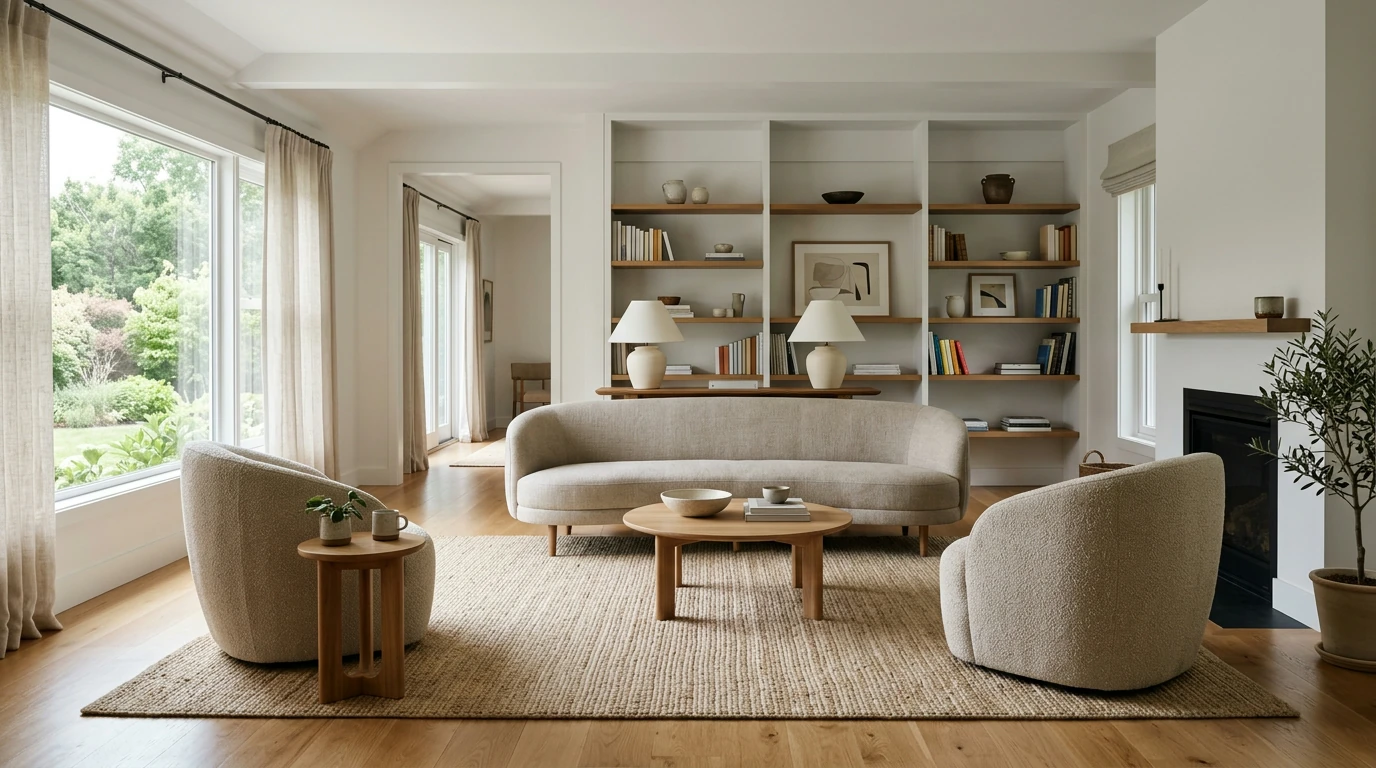
Curved furniture can soften a room’s straight lines and make a seating area feel more inviting. Its rounded profile can also help guide the eye through a space, but a comfortable layout still depends on clear paths and furniture that fits.
We recommend starting with the way you use your room, then experimenting with placement before committing to a heavy lift. Our digital styling guide offers a starting point for exploring curved furniture and home decor arrangements.
Start with the Shape of Your Room
Before choosing a sofa or chair, consider what the room needs to do. Is it primarily a place for conversation, reading, watching television, or a combination of activities? Note the entrances, windows, and routes you take most often. These details can help you choose a focal point without making the room awkward to navigate.
A curved sofa can soften the strong lines of a rectangular living room, while a rounded chair can introduce a gentler silhouette beside a straight-edged bookcase. You don’t need a fully rounded room for either piece to work; the contrast can make both shapes stand out.
Measure the furniture at its widest and deepest points, not just along the visible curved edge. Compare those dimensions with your available floor space and account for nearby doors, drawers, and seating. A piece that appears compact from the front may project farther into the room than you expect.
Place Curved Pieces for Easy Movement
Position a curved sofa so its seats face a conversation area or another focal point, while leaving entrances and pathways clear. If the sofa floats away from a wall, pay particular attention to the route behind it. You should be able to move through the room without repeatedly sidestepping its outer edge.
For a reading corner, angle a rounded chair toward a lamp or window and add a small surface within reach. Leave enough space to approach the chair, sit down, and stand up comfortably. Avoid placing its back where it narrows a route to another part of the room.
Before moving heavy furniture, mark the full footprint on the floor with painter’s tape. Walk around the outline, open nearby doors, and try reaching the surfaces you use daily. Adjust the markings until the arrangement feels natural.
| Piece | Placement idea | What to check |
|---|---|---|
| Curved sofa | Face it toward a conversation area or focal point | Keep the route around its back clear |
| Rounded armchair | Angle it toward a sofa or reading light | Leave room to sit down and stand up |
| Round coffee table | Center it within reach of seating | Leave comfortable space for passing |
Everyone’s movement needs are different, so test the layout with the people who use the room. For broader accessibility guidance, the ADA Standards for Accessible Design provide a useful reference, though their requirements apply to covered facilities rather than every private home.
Balance Curves with Other Shapes
A curved piece often looks best when it has a little contrast. Try rounded upholstery alongside straight-edged shelving, a rectangular rug, or a clean-lined sideboard. The straight pieces can give the room structure while the curved furniture brings softness.
Repeat the curve once or twice in smaller accents, such as a round mirror or side table, rather than making every element rounded. A restrained color palette can tie different silhouettes together. Texture helps, too: a woven rug, smooth wood, and softly upholstered seating can feel cohesive without matching exactly.
You can carry a similar idea into an adjoining bathroom with our Golden Ceramic Round Bathroom Sink. Its round form offers a curved accent that can sit comfortably alongside straight-edged cabinetry. Measure the available vanity space and consider installation requirements before choosing a sink.
Adapt the Layout to Your Space
In a compact room, start with one curved statement piece and keep the supporting furniture modest in scale. A rounded chair with a small side table may provide the softness you want without filling the floor. Choose an arrangement that leaves a clear route between the entrance and the places you use most.
In a larger or open-plan room, a curved sofa can help define a conversation zone without adding a divider. Pair it with chairs that face inward, then use a rug to visually connect the seating. Leave circulation space outside the grouping so people can pass through without cutting between every seat and the table.
From each main seat, check sightlines toward windows and focal points. Also make sure doors open freely, storage remains accessible, and frequently used surfaces are easy to reach. Our team recommends revisiting these checks after adding lamps and accessories, since smaller pieces can change how a path feels.
Explore the Curved Furniture Styling Guide
If you want a starting point for arranging curved furniture at home, explore our Styling with Curved Furniture digital guide. It’s a digital-download interior styling guide focused on home decor and furniture placement ideas. The listed price is $6.99 USD; visit the product page for current purchase details.
FAQ
Can curved furniture work in a small room?
Yes. Start with one appropriately sized curved piece, measure its full footprint, and keep walking routes clear.
Should curved furniture be placed against a wall?
It can be, but the best position depends on your room’s shape and traffic flow. Try both wall-adjacent and floating arrangements where space allows.
What is the Styling with Curved Furniture guide?
It is a digital-download interior styling guide covering home decor layout tips and curved furniture placement.
Recommended for you


Was this article helpful?
Yes
No



Leave a comment