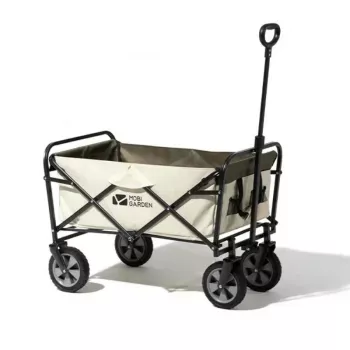
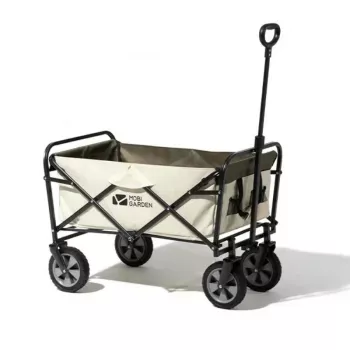
A folding utility wagon makes it easier to move bulky gear in one trip—coolers, tents, chairs, water jugs, beach bags, and event supplies. This portable camping trolley with a pull rod is designed for quick setup, stable hauling, and compact storage when the day is done. Whether you’re crossing a parking lot, rolling down a paved path, or navigating patchy grass, the right folding wagon helps keep the load controlled and your hands free for the rest of the checklist.
For low-friction logistics, a folding wagon is most valuable when you’re moving multiple awkward items at once—especially anything boxy (coolers, bins) or long (folding chairs, canopy legs) that’s annoying to carry by hand.
If the wagon will be used by more than one person, pay special attention to handle length and how solidly it locks. A handle that’s too short can cause heel strikes; a handle that wobbles can make steering feel unpredictable when the wagon is heavy.
A fast open-and-close routine matters most when you’re arriving late, breaking camp in the rain, or bouncing between parking areas and event entrances. A consistent folding habit also helps protect hinges, fabric seams, and wheel mounts over time.
A practical rule: if you can’t stop the wagon smoothly with one hand on the handle, the load is either too heavy, too tall, or too far forward. Repack so the weight sits over the center of the bed and the wagon tracks straight without constant steering correction.
Terrain changes are where a stable wheelbase and good tracking show their value. If you’re heading to public lands, planning ahead helps reduce last-minute hauling distance—check guidance from the National Park Service trip-planning resources and use packing tips from REI Co-op Expert Advice to keep loads efficient and manageable.
If you camp or beach-camp often, it’s worth pairing a quick rinse-and-dry routine with low-impact habits at the site. The Leave No Trace Seven Principles are a helpful baseline for minimizing wear on trails and staging areas while keeping gear organized.
| Item to confirm | Why it matters |
|---|---|
| Maximum load rating | Helps prevent frame flex and wheel failure when hauling heavy gear |
| Bed dimensions (open) | Ensures coolers, bins, and chairs fit without unsafe stacking |
| Folded dimensions | Determines whether it stores easily in a vehicle or small storage area |
| Wheel type/diameter | Affects rolling effort on gravel, grass, and sand |
| Handle length/lock | Improves control and reduces strain during long pulls |
| Fabric and frame materials | Impacts durability, cleaning effort, and weather resistance |
It’s built to fold down for compact storage, but trunk space varies. Check the folded dimensions on the product page and compare them to your trunk opening and available floor area.
It can handle mixed outdoor surfaces, but pulling effort increases on soft sand and loose gravel. Keep the load lighter, pull steadily, and choose firmer routes when possible.
Remove sand and debris before folding, then wipe down the frame and pull rod. Spot-clean the fabric with mild soap and water and let everything dry fully before storing to help prevent odor and corrosion.



Leave a comment