HomeBlogBlogHigh-Speed Commercial Conveyor Toaster: Bread & Bagels

High-Speed Commercial Conveyor Toaster: Bread & Bagels

High-Speed Commercial Conveyor Toaster: Bread & Bagels

Commercial Electric Conveyor Toaster Basics: Fast, Consistent Toast for Busy Service

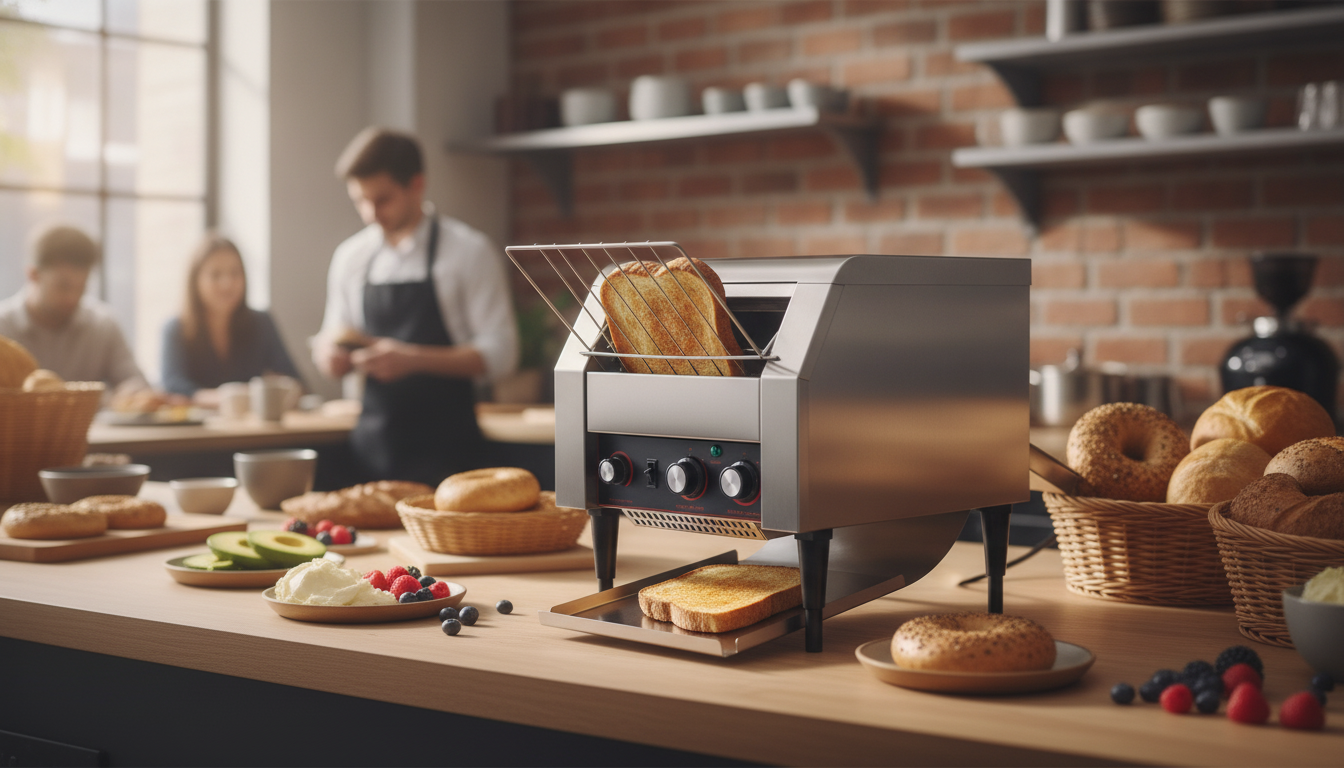
A high-speed conveyor toaster is built for steady output during peak hours, turning bread and bagels into repeatable, consistent toast with a simple pass-through workflow. Instead of waiting for cycles like a pop-up toaster, staff feed product into one side and receive toasted items on the other—keeping tickets moving when breakfast service hits its rush. For more guidance, see Toaster – Wikipedia.

Below is a practical guide to what a commercial electric conveyor toaster does best, which features matter most before buying, how to set one up for consistent browning, and the maintenance habits that help it perform reliably day after day. For further reading, see Fact Sheet #58: Cooking and Baking under the Federal Child Labor ….

What a conveyor toaster does well in a commercial kitchen

  • Continuous toasting: slices feed in at one end and exit toasted, reducing bottlenecks during rush periods.
  • Consistency: conveyor speed and heat settings help standardize browning across staff and shifts.
  • Throughput for breakfast service: supports repeated cycles without the stop/start cadence of pop-up toasters.
  • Simple workflow: front-of-house or back-of-house staff can operate with minimal steps.
  • Versatility: commonly used for bread, bagel halves, buns, and some pastries depending on thickness and sugar content.

Key features to look for before buying

  • Adjustable conveyor speed: fine-tune color and dryness without changing bread type or portioning.
  • Independent heat controls (where available): useful when alternating between lighter sandwich bread and denser bagels.
  • Wide feed opening and stable product guides: helps reduce jams and uneven travel that can cause patchy browning.
  • Removable crumb tray: speeds up daily emptying and lowers the chance of smoke from accumulated crumbs.
  • Cool-touch areas and heat shielding: helps reduce accidental contact during high-pace service.
  • Durable build and stable feet: important for countertop use on busy prep lines where equipment gets bumped and shifted.

Quick comparison: conveyor toaster vs. pop-up vs. salamander-style finishing

Choosing the right toasting method usually comes down to service style. Conveyor models shine when volume and repeatability matter, while other tools can be better for low-volume kitchens or finishing open-faced items.

Choosing a toasting method by service style

Option Best for Trade-offs
Conveyor toaster Continuous breakfast service, consistent browning Takes counter space; needs routine crumb management
Pop-up toaster Low volume, limited menu Slower peak output; inconsistency between cycles
Salamander/broiler Open-faced melts and finishing Requires attention; less standardized for high volume toast

For bagels, conveyor toasters are typically easier to standardize across multiple staff members because results depend on a consistent speed/heat combination rather than individual timing.

Setting up for consistent toast and bagels

  • Placement: set the unit on a stable, level surface with adequate clearance for heat dissipation and safe pass-through.
  • Power: confirm outlet capacity and avoid sharing circuits with other high-draw appliances when possible. For electrical best practices and code considerations, reference NFPA 70: National Electrical Code (NEC).
  • First-run check: run the conveyor briefly empty to confirm smooth belt movement and normal heating before loading food.
  • Dialing in toast color: start with a medium heat setting and moderate conveyor speed, then adjust one variable at a time. Small changes make a big difference once the unit is fully warmed.
  • Bagel approach: bagels often need slower speed or higher heat due to density. Keep outcomes consistent by standardizing bagel thickness and the cut (even halves toast more evenly than uneven slices).
  • Output staging: use a landing tray or heat-safe surface at the exit so toasted product doesn’t drop, slide, or slow plating.

Daily cleaning and weekly maintenance habits

For sanitation and food-equipment cleanliness expectations, consult resources aligned with local health rules and recognized standards such as the FDA Food Code and NSF International guidance on food equipment standards and sanitation.

Safety and compliance considerations for foodservice

Who benefits most from a high-speed conveyor toaster

Product spotlight: Commercial Electric Conveyor Toaster – High-Speed Bread & Bagel Maker

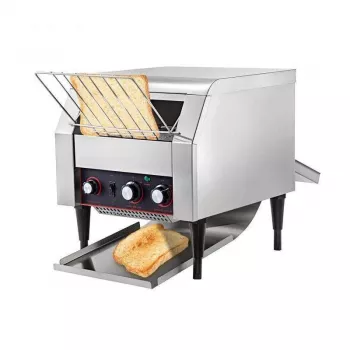
For operations that need reliable, repeatable output, the Commercial Electric Conveyor Toaster – High-Speed Bread & Bagel Maker is designed for continuous toasting with adjustable controls to help staff dial in consistent browning. It’s a practical fit for bread slices and bagel halves during busy service windows, with a straightforward countertop workflow that’s easy to repeat shift after shift.

More in-stock picks

FAQ

How do conveyor toaster settings affect bagels compared with bread?

Bagels are denser and often hold moisture differently than sliced bread, so they typically need a slower conveyor speed or slightly higher heat to reach the same browning. Change only one setting at a time, and keep bagel thickness and cut consistent so results stay repeatable across shifts.

Why does a conveyor toaster start smoking during service?

Smoking is commonly caused by an overfilled crumb tray, carbonized residue from butter or sugar, or restricted airflow from buildup. Power down when safe, let the unit cool, and clean it per the manufacturer’s instructions—then increase how often crumbs are emptied during heavy runs.

Can a conveyor toaster handle buttered or sugared items?

Butter and sugar can drip, burn, and create smoke or stubborn residue, so many kitchens toast items plain first and add toppings afterward. Sticky glazes can also increase cleaning needs and may not be suitable depending on the unit’s design and the product’s thickness.

Was this article helpful?

Yes No
Leave a comment
Top

Shopping cart

×