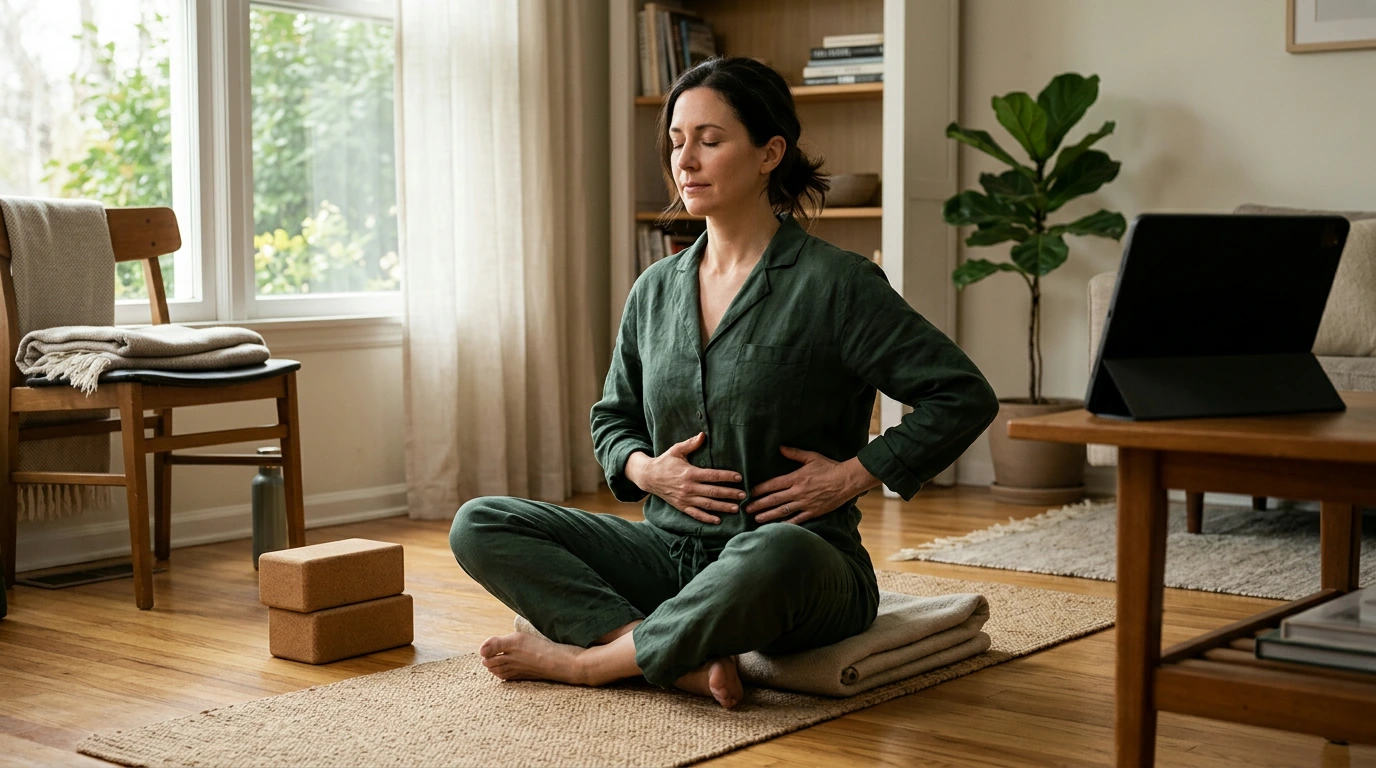
Gentle yoga, steady breathing, and consistent routines can support cardiovascular wellness by improving circulation, easing stress, and encouraging better sleep and recovery. The goal isn’t to “push harder”—it’s to practice in a way that keeps effort smooth and sustainable, so the body can downshift out of stress and into restoration. When paired with clinician-approved aerobic movement like walking, yoga can be a practical, low-impact way to build steadiness over time.
Below are heart-friendly poses, breathing practices, and three ready-to-use routines you can rotate through the week. If you’re new to yoga or returning after time away, start with the lowest-energy option and build gradually.
Yoga supports heart wellness through a few simple (but meaningful) mechanisms that fit into daily life:
Yoga is adaptable, but heart-related symptoms deserve extra care. Seek medical guidance before starting if there is known heart disease, uncontrolled blood pressure, arrhythmia symptoms, recent surgery, or chest pain with activity. During practice, keep breathing smooth (nasal when possible) and avoid breath-holding or forceful techniques.
| Signal | What to do |
|---|---|
| Chest pain/pressure, radiating discomfort | Stop immediately and seek urgent medical care |
| Dizziness, faintness, nausea that worsens | Lie down, elevate legs if appropriate, reassess before continuing |
| Irregular heartbeat or fluttering with weakness | Stop and consult a clinician before resuming |
| Severe shortness of breath beyond expected effort | Stop, rest, and seek medical advice if persistent |
Breathwork works best when it’s comfortable. You should never feel like you’re “gasping” or forcing. Choose a posture that supports your spine—sitting on a chair or cushion is often more sustainable than sitting on the floor.
If you’re curious about what research says and how to practice safely, the National Center for Complementary and Integrative Health has a balanced overview of yoga benefits and precautions: https://www.nccih.nih.gov/.
Favor steady breathing, relaxed facial muscles, and slow transitions. If your effort rises, shorten the hold, widen your stance, or add support.
Pick the routine that matches your energy level. The best routine is the one you can repeat consistently.
2 min diaphragmatic breathing; Cat–Cow (1–2 min); Legs Up the Wall (4–5 min); gentle seated twist (1 min/side); quiet breathing (1 min).
| Day | Routine | Duration | Goal |
|---|---|---|---|
| Mon | 10-minute calming reset | 10 min | Stress reduction |
| Tue | 20-minute steady flow | 20 min | Light conditioning |
| Wed | Restorative (Legs Up the Wall + breathing) | 10–15 min | Recovery |
| Thu | 20-minute steady flow | 20 min | Consistency |
| Fri | Evening wind-down | 10–20 min | Sleep support |
| Sat | Walk + 10-minute calming reset | As tolerated | Cardio balance |
| Sun | Gentle mobility + relaxation | 10–20 min | Reset |
Often yes with clinician approval and appropriate modifications. Emphasize gentle movement, avoid breath-holding or straining, use props, and stop immediately for warning symptoms like chest pressure, dizziness, or palpitations.
Diaphragmatic breathing and extended exhales are reliable starting points. Keep the breath smooth and comfortable, and reduce intensity or return to normal breathing if you feel lightheaded.
Consistency beats intensity: aim for about 3–5 short sessions per week and include restorative days. Build gradually based on recovery, sleep quality, and how steady your breathing feels during practice.







Leave a comment