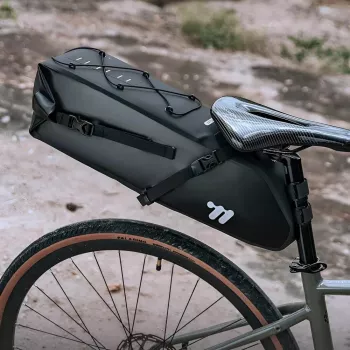
A waterproof saddle bag is one of the simplest ways to go rackless without giving up stability. Instead of bulky panniers, a streamlined tail bag keeps gear tucked behind the saddle, protected from wheel spray, and centered for better handling on gravel, mixed terrain, and long day rides. With 12.5 liters of space, this size lands in the sweet spot for multi-hour routes and minimalist overnighters—big enough for key layers and essentials, but compact enough to stay nimble when the road turns rough.
A 12.5L saddle bag is designed for riders who want a capable load without committing to a rear rack. It’s especially useful when the route includes dirt, washboard, or singletrack where a narrower profile and secure load make the bike feel more predictable.
For general bikepacking setup guidance, the REI Co-op bikepacking basics and resources from the Adventure Cycling Association are solid references for dialing in a bag system that matches your terrain and pace.
To get the most from 12.5 liters, think “compressible and light.” This volume shines when it’s packed with soft goods (layers and sleep essentials) and a compact repair kit—while heavier dense items are kept closer to the bike, not hanging at the far end where they can amplify sway.
| Category | Items that typically fit | Packing tip |
|---|---|---|
| Clothing | Light jacket, spare jersey, arm/leg warmers, socks | Roll clothing into tight bundles to reduce shifting |
| Weather | Compact rain shell, gloves | Place on top for quick access |
| Sleep (minimal) | Bivy or ultralight quilt (depending on size), inflatable pillow | Compress and load toward the front near the seatpost |
| Tools & spares | Tube, tire levers, mini pump/CO2, multitool, quick links | Use a pouch; keep heavier items closer to the bike |
| Food & small items | Snacks, headlamp, battery pack | Put in small bags to stop rattling |
A waterproof saddle bag helps protect insulation, spare layers, and electronics during rain, puddle splash, and the constant mist that comes from a wet rear tire. That said, “waterproof” performance still depends on how you pack and close the bag—especially if you’re riding through extended storms.
Keeping closure surfaces clean matters more than most riders expect. Fine grit can interfere with sealing and gradually wear high-friction areas. For general cleaning and maintenance practices, Park Tool’s maintenance and cleaning guides are a reliable place to start.
Fit is just as important as capacity. A 12.5L saddle bag can work on many bikes, but tire clearance, saddle position, and seatpost shape all determine how stable the setup will feel when you stand up to climb or descend.
If you’re building a rackless setup or upgrading from a smaller seat pack, the Waterproof Bicycle Saddle Bag 12.5L Large Capacity Tail Bag for Bikepacking is sized for fast bikepacking and minimalist touring. The rear-mount saddle format keeps the bike agile compared with panniers, while the waterproof design helps shield essentials from rain and road spray.
| Item | Details |
|---|---|
| Product name | Waterproof Bicycle Saddle Bag 12.5L Large Capacity Tail Bag for Bikepacking |
| Capacity | 12.5L |
| Use | Bikepacking / tail bag / saddle bag |
| Availability | In stock |
| Price | $47.97 USD |
Yes—if your kit is minimalist and compressible. Aim for a compact sleep setup and smart layering, and consider pairing the saddle bag with a small frame bag or handlebar roll if you want extra food or comfort items.
Pack heavier items toward the seatpost end, remove empty space with compression straps, and avoid overstuffing. After the first 10–15 minutes of riding, re-tighten straps once the fabric and load settle.
It can, provided the closure is secured correctly and the sealing surfaces stay clean. For prolonged storms or river crossings, adding a secondary liner for electronics and critical insulation provides extra insurance.






Leave a comment