A two-way pet stroller makes everyday outings easier by letting the rider face forward for sightseeing or face the handler for reassurance and check-ins. With a foldable frame for storage and travel, this style is especially useful for medium and large pets that tire easily, are recovering from injury, or need a calmer way to join longer walks.
What a two-way stroller changes on walks
Direction matters more than most people expect. A reversible, two-way cabin can turn a stressful trip into a steady, predictable ride—especially for bigger pets who can’t easily be scooped up when they get overwhelmed.
- Forward-facing mode supports curious pets who want to watch the surroundings and stay stimulated during longer routes.
- Parent-facing mode helps anxious, senior, or post-op pets feel secure and allows quick visual checks of breathing, posture, and comfort.
- Switching directions can reduce pulling and restlessness by matching the pet’s mood (alert vs. needing reassurance).
- In crowded areas, quick monitoring helps avoid stress triggers like bicycles, loud noises, or other dogs.
- For training calm behavior, begin parent-facing, then transition to forward-facing once settled.
Key features to look for in a foldable stroller for bigger pets
Medium and large pets place different demands on a stroller than toy breeds do. Prioritize structure, stability, and secure containment first—then look at convenience add-ons.
- Cabin space and load rating: choose a stroller designed for medium and large pets, with enough interior room for the pet to sit, turn, and lie down comfortably.
- Stable frame geometry: a wider wheelbase and sturdy chassis reduce tipping risk when turning or stopping.
- Secure entry and containment: look for a reliable zipper or latch system plus an interior safety tether to prevent jumping out.
- Ventilation and visibility: mesh panels help airflow and allow the pet to see out while staying protected.
- Brake system: a foot brake that locks the rear wheels is important for stops on slopes or when loading/unloading.
- Handle ergonomics: a comfortable handle height and grip reduce wrist strain on longer walks.
- Fold mechanism: one-step or quick fold designs make it easier to lift into a car trunk or store in a closet.
- Weather protection: a canopy or cover helps with sun and light rain; consider reflective accents for low-light use.
Comfort and safety essentials for medium & large pets
Bigger pets feel vibration and instability more than you might think, and they also generate more heat inside the cabin. A few practical habits make rides smoother and safer.
- Floor support: a firm, supportive base prevents sagging that can stress joints, especially for heavier or older pets.
- Smooth ride: wheels and suspension (if present) reduce vibration on pavement seams and uneven paths.
- Controlled airflow: ample mesh helps prevent overheating; avoid fully covering the cabin in warm weather.
- Low-stress loading: a wide opening and stable stance makes it easier to guide a larger pet inside without lifting too high.
- Leash/tether use: clip the interior tether to a harness rather than a collar to reduce neck strain.
- Stop-and-check routine: in hot or humid conditions, pause regularly to confirm the pet is comfortable and not panting excessively.
- Traffic awareness: treat the stroller like a small vehicle—use crosswalks, keep to the right on shared paths, and avoid abrupt turns.
For warm-weather planning, follow hot-weather safety guidance from trusted sources like the American Veterinary Medical Association (AVMA) and the American Kennel Club (AKC).
Foldability and real-life portability
A foldable stroller only helps if it’s easy enough to use when you’re juggling a leash, keys, and a pet who’s ready to go. Think through your routine before buying.
Quick checklist before buying
| Need |
Why it matters |
What to confirm |
| Pet size fit |
Prevents cramped posture and stress |
Interior length/width and max load rating |
| Two-way direction |
Adapts to anxiety or curiosity |
How the seat/cabin reverses and how secure it locks |
| Wheel stability |
Reduces wobble and tipping |
Wheelbase width, rear brake, turning control |
| Ventilation |
Helps prevent overheating |
Mesh area, airflow paths, canopy coverage |
| Easy fold |
Makes the stroller usable day-to-day |
Fold steps, folded dimensions, carry/lift comfort |
Who benefits most from a two-way stroller
For broader everyday pet safety and care tips, the ASPCA is a helpful reference.
Getting started: setup, training, and daily use
Care and maintenance to keep it rolling smoothly
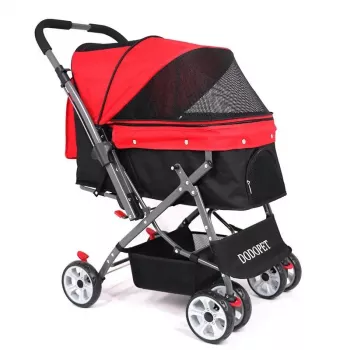
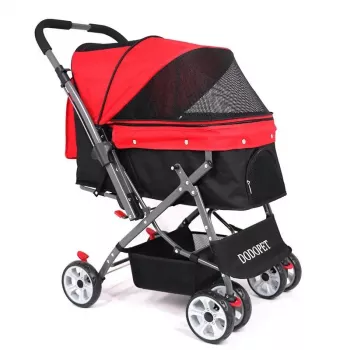
Featured option: foldable two-way stroller for medium & large pets
Foldable Pet Stroller with Two-Way Design for Medium & Large Pets
Extras for outing days (in stock)
FAQ
Can a medium or large dog ride in a pet stroller safely?
Yes—when the stroller is rated for your pet’s weight, has a stable wheelbase and reliable brakes, and your pet is secured with an interior tether clipped to a harness. Make sure your pet can sit and lie down comfortably without pressing against the canopy.
When is parent-facing mode better than forward-facing mode?
Parent-facing is ideal for anxious pets, seniors, and recovery periods because it supports reassurance and allows frequent check-ins. Forward-facing is better for calm pets that enjoy watching the environment and staying mentally engaged.
How do you help a pet get used to a stroller?
Use gradual exposure: let your pet explore the stationary stroller at home with treats, practice short indoor rides, then slowly increase outdoor time. Keep early sessions calm and brief, and avoid forcing entry.
Recommended for you



Leave a comment