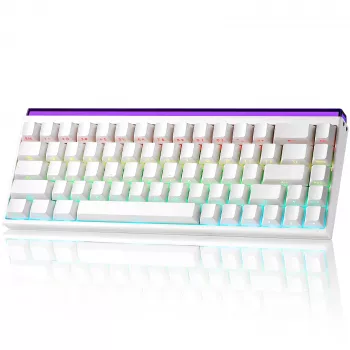
Fast actuation and consistent key feel can make movement and timing-heavy games feel more controlled. This 65% magnetic keyboard pairs Hall effect sensing with rapid trigger behavior and customizable RGB in a compact layout that fits smaller desks while keeping essential keys close.
Traditional mechanical switches typically rely on physical contact points to register a keypress. A magnetic keyboard uses Hall effect sensing to measure key travel with a magnetic field, which can stay consistent over time because it doesn’t depend on metal contacts meeting at a specific spot.
To learn more about the underlying tech, Texas Instruments provides a clear overview of how Hall effect sensors work, and the USB-IF documentation explains how keyboards present inputs to operating systems via USB HID usage tables.
Magnetic rapid trigger keyboards are popular because they can feel “connected” to your inputs—especially in games where micro-movements matter and repeated inputs happen constantly. While skill and settings still matter most, the input behavior can feel easier to control once dialed in.
This compact board focuses on responsiveness and customization without taking over your desk. If you like fine-tuning how and when keys register, the combination of Hall effect sensing and rapid trigger-style behavior is the main draw.
| Feature | What it means | Why it matters |
|---|---|---|
| Hall effect switches | Magnetic sensing for key travel detection | Consistent actuation and reduced dependence on physical contact |
| Rapid trigger behavior | Earlier reset point during key release | Faster repeated inputs and tighter movement control |
| 65% layout | Compact board with essential keys | More mouse space without giving up arrows on many 65% designs |
| RGB lighting | Multi-color illumination and effects | Visibility and personalization for profiles and layouts |
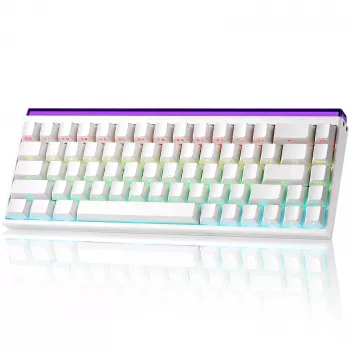
In stock now: Rapid Trigger Magnetic 65% Gaming Keyboard with RGB and Hall Effect Switches
Magnetic actuation shines when settings match your habits. A few minutes of tuning can make inputs feel snappy without becoming overly sensitive.
A practical approach is to tune until your “resting fingers” never trigger movement unintentionally, then lower actuation only when you’re confident in control. For many players, that balance feels better than chasing the lowest possible setting.
Not everyone needs adjustable actuation, but it can be a standout upgrade for the right setup and playstyle.
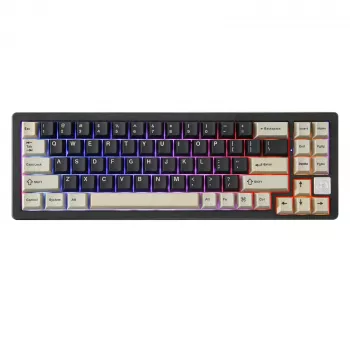
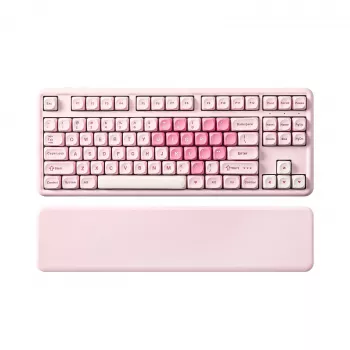
If you’re building out a setup or shopping for gifts while you’re here, these items are also currently available:
Hall effect switches use magnetic sensing rather than physical contact points, which can provide more consistent actuation and adjustable settings. Whether they’re “better” depends on the feel you like, the software features available, and the types of games you play.
Rapid trigger changes how quickly a key resets as it rises, allowing faster re-presses and tighter control during repeated taps and quick direction changes. It doesn’t increase your game’s FPS; it changes input behavior and responsiveness.
A 65% keyboard saves space while often keeping arrow keys, making it practical for daily use once you’re comfortable with function-layer shortcuts. The main tradeoff is losing the numpad and some dedicated navigation keys.



Leave a comment