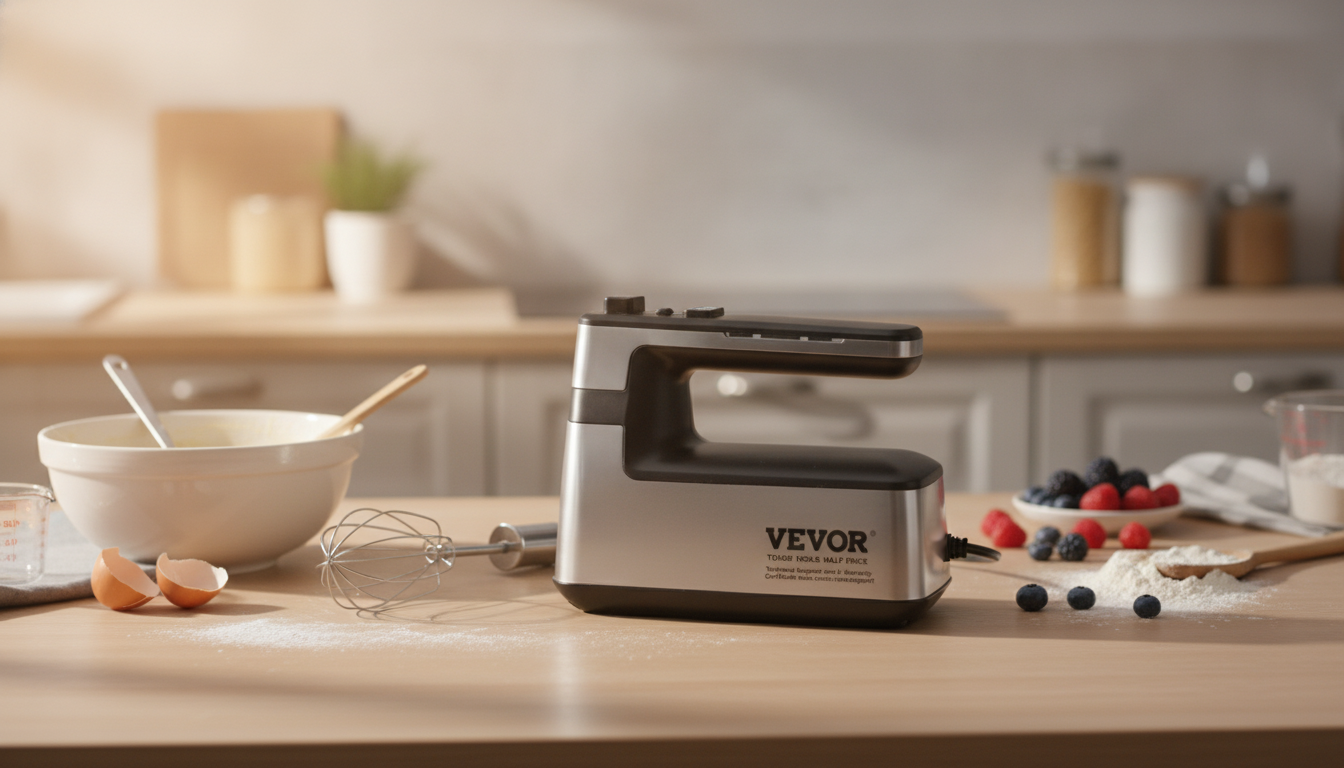
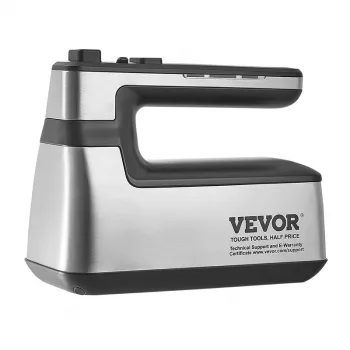
A cordless hand mixer keeps counters clear, moves easily from prep space to stove, and helps handle quick mixing jobs without hunting for an outlet. This turbo-boost model is designed for everyday batters, whipped mixtures, and fast finishing bursts when ingredients need a final blend.
For many kitchens, the biggest upgrade isn’t more power—it’s more flexibility. A cordless mixer lets you work where it’s comfortable, whether that’s next to the sink for easier cleanup or closer to the stovetop when finishing a sauce.
That mobility also helps with real-life workflow: you can pivot from mixing to scraping to pouring without repositioning a cord or guarding it from the edge of a hot burner.
Turbo boost is best thought of as a short, controlled “assist” rather than a default speed. It’s useful when a mixture needs one last push to come together, especially when ingredients are thicker, cooler, or slightly stubborn.
A simple technique that reduces mess: keep the beaters fully submerged, angle the bowl slightly, and tap turbo in brief pulses while moving around the perimeter. This targets pockets of dry ingredients and stubborn streaks without blasting the whole bowl at top speed.
Speed choice affects texture as much as it affects time. Starting slower helps ingredients hydrate evenly, while higher speeds introduce air—great for whipped mixtures, but not always ideal for dense batters.
For the most consistent results, pause once or twice to scrape the bowl and beaters. Many “lumps” aren’t from under-mixing—they’re from ingredients sticking above the mixing path and never getting fully incorporated.
Cordless convenience depends on good charging habits. A well-cared-for battery keeps performance steadier across the life of the mixer and reduces the chance of a slowdown mid-recipe.
If you bake in short sessions (frosting one day, pancakes the next), topping off the charge before use is often more practical than leaving it plugged in continuously—unless the manufacturer explicitly says that long-term docking is battery-safe.
A few small habits can make mixing cleaner, faster, and more consistent—especially when working with lighter dry ingredients that tend to puff into the air.
For kitchen safety basics—especially when multitasking—review guidance from USDA Food Safety and Inspection Service, and for general consumer product safety updates, the U.S. Consumer Product Safety Commission (CPSC) is a helpful reference.
| Feature | Cordless Hand Mixer | Corded Hand Mixer |
|---|---|---|
| Mobility | Mix anywhere; no outlet needed during use | Limited by cord length and outlet placement |
| Counter clutter | Minimal; easier to keep prep space clear | Cord management needed |
| Best for | Quick jobs, small-to-medium batches, multitasking | Longer sessions and frequent heavy mixing |
| Turbo boost use | Ideal in short bursts to save battery | Can be used longer without battery concerns |
| Charging/Power | Requires charging and battery care | Continuous power while plugged in |
Use turbo in short bursts—just a few seconds at a time—mainly to finish blending or push through a brief thick spot. Short pulses help maintain control, reduce splatter, and avoid overmixing.
It can handle many cookie dough bases when ingredients are softened and mixed in stages (cream butter and sugar first, then add dry ingredients gradually). Very stiff doughs or large batches are typically better suited to a stand mixer.
Store it in a cool, dry place with clean, fully dry attachments. Keep it away from heat sources, and charge according to the manual—topping up before use is often preferable to leaving it on the charger indefinitely unless the manufacturer says it’s safe.




Leave a comment