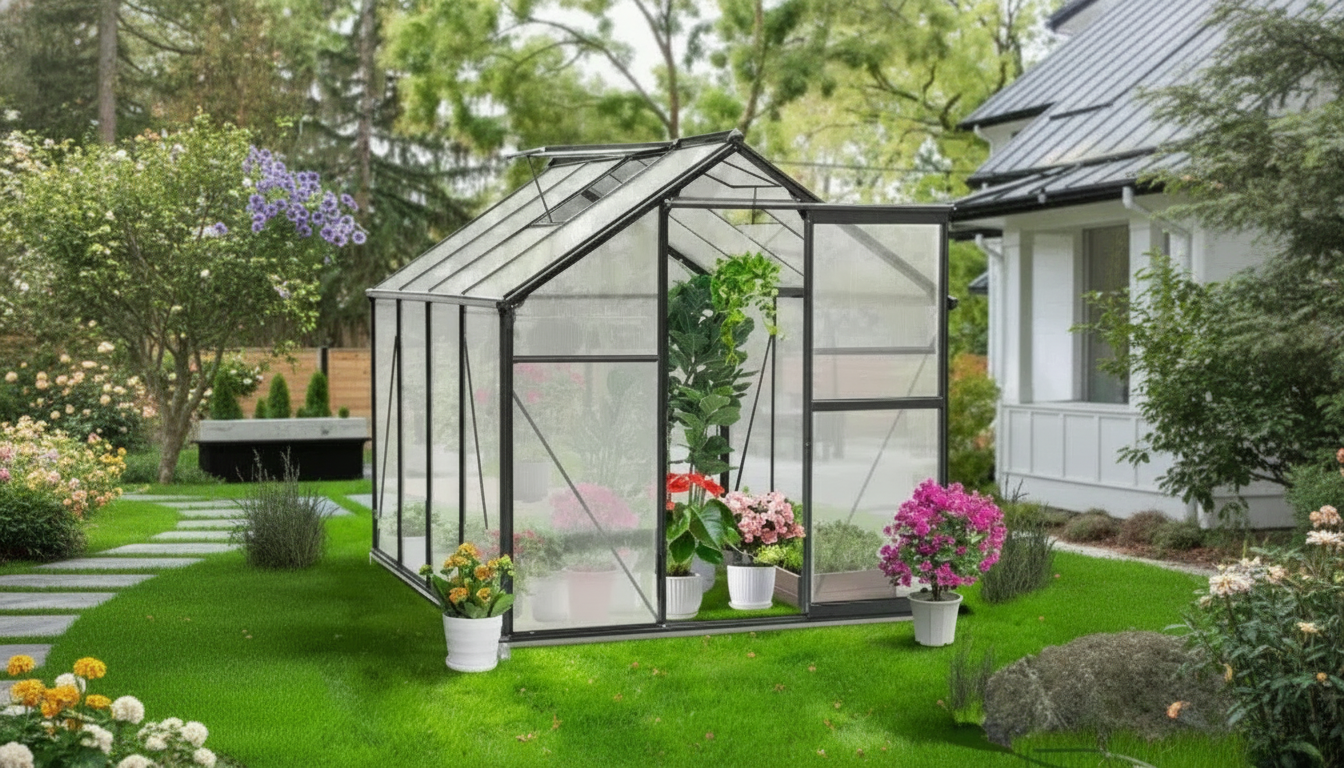
A 6 x 8 walk-in greenhouse creates a protected, bright growing zone that helps stretch your season for seedlings, herbs, leafy greens, and tender plants. With polycarbonate panels and an aluminum frame, this size is designed to balance insulation, light diffusion, and weather resistance while still fitting comfortably in many backyards, side yards, or roomy patios. It’s also large enough to step inside and work—without committing to the footprint (or upkeep) of a full-size greenhouse.
A 6 x 8 footprint hits a practical “sweet spot” for home growing: big enough to organize plants and tools, yet compact enough to place close to the house for easy daily checks.
If you’re planning around local climate, it helps to confirm your USDA zone so you can time starts and frost protection more accurately. The USDA Plant Hardiness Zone Map is a quick reference.
Polycarbonate is popular for backyard greenhouses because it’s designed for active outdoor use—where kids, pets, hail, and surprise wind gusts can make glass or flimsy film a risky choice.
For seed-starting and early propagation, stable warmth and bright (but not scorching) light are key. If you’re refining your seed-starting routine, the University of Minnesota Extension guide on starting seeds indoors offers useful fundamentals that translate well to greenhouse setups.
A greenhouse frame needs to stay straight and secure through humidity, temperature swings, and seasonal weather. Aluminum is a strong match for those demands.
Even with a sturdy frame, long-term performance depends on good siting and anchoring. A greenhouse that’s level and well-secured is easier to ventilate, easier to keep warm, and less likely to develop panel stress over time.
Smart placement is often the difference between a greenhouse that’s a joy to use and one that fights you all season.
| Item | Why it matters | Rule of thumb |
|---|---|---|
| Sun exposure | Improves growth and reduces damping-off risk | Prioritize 6+ hours of sun if possible |
| Level base | Helps doors close properly and reduces panel stress | Check level in multiple directions |
| Wind protection | Limits heat loss and storm strain | Use a fence/hedge windbreak without shading |
| Access to water/power | Supports watering and optional fans/heaters | Keep hoses and cords short and safe |
Small greenhouses can heat up surprisingly fast—even when outside air feels mild—so ventilation isn’t optional. It’s daily management that protects plants and prevents stress.
If you want to go deeper on airflow principles and why venting matters so much, the University of Georgia Extension has a helpful starting point on greenhouse ventilation concepts: University of Georgia Extension — Greenhouse Ventilation (resource hub).
A small accessory that can make greenhouse work feel tidier is a wipe-clean tray for gathering packets, labels, snips, and gloves in one place. The Luxury 12-Inch Stainless Steel Decorative Tray for Home, Kitchen & Countertop can also double as a simple carry-tray for lightweight gardening odds and ends.
When you’re ready to add a dedicated backyard growing space, the 6 x 8 FT Walk-In Polycarbonate Greenhouse with Aluminum Frame for Outdoors is a practical size for seed starting, season extension, and protected plant care—without taking over the yard.
Full sun is helpful, but it isn’t always required. Morning-to-midday sun is often the most productive for steady growth, while light afternoon shade can reduce overheating. If shade is unavoidable, trimming back overhanging branches and placing the greenhouse to capture the brightest window of the day can make a noticeable difference.
Vent early—before temperatures spike—by opening the door and any roof vents, and close them later as the day cools. A small circulation fan helps move hot air off the ceiling and reduces stagnant humidity. Tracking highs with a simple thermometer makes it easier to build a consistent routine, and shade cloth can help during sudden warm spells.
Compacted gravel offers good drainage and is budget-friendly, while pavers provide a clean, stable surface that’s easy to sweep. A base frame can be a strong option when you want a defined footprint and straightforward anchoring. Whichever you choose, prioritizing a level surface and secure anchoring matters most for door alignment and wind stability.


Leave a comment