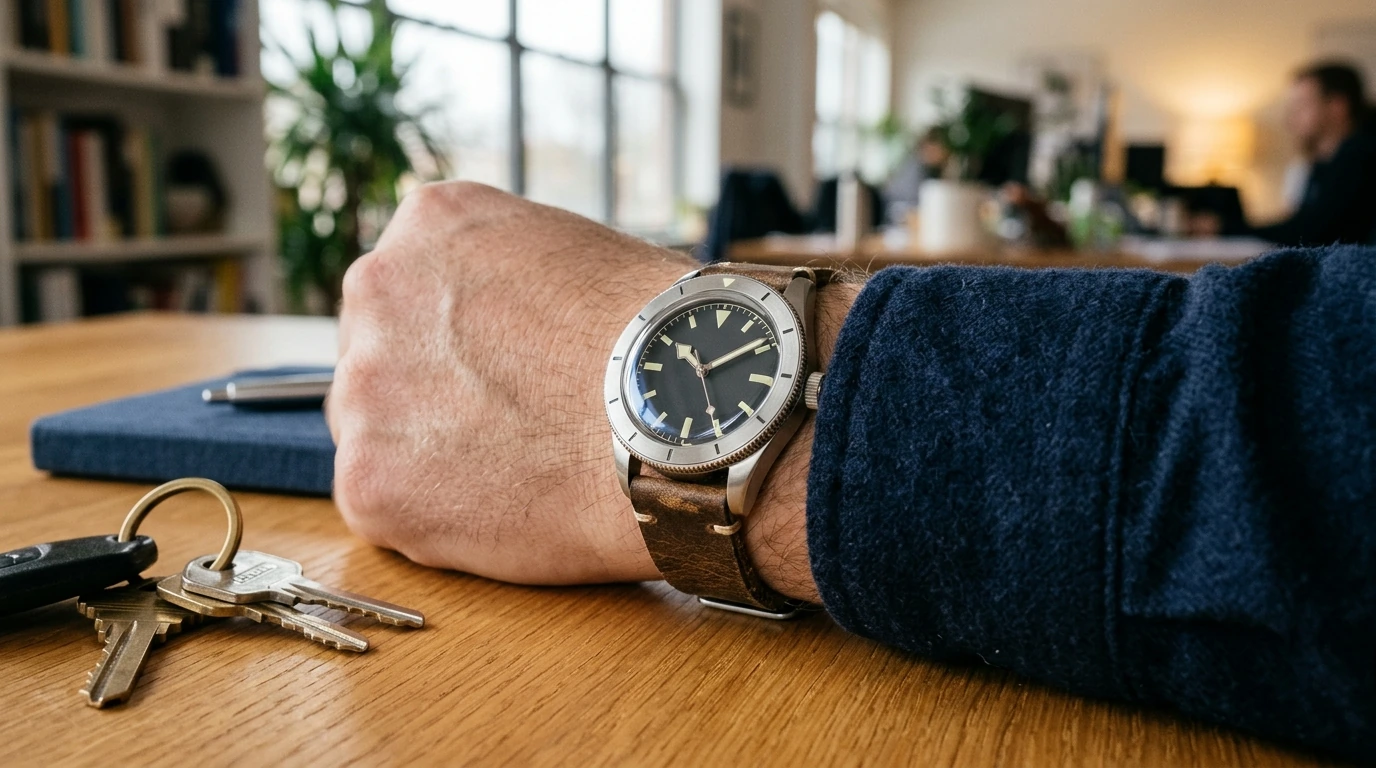
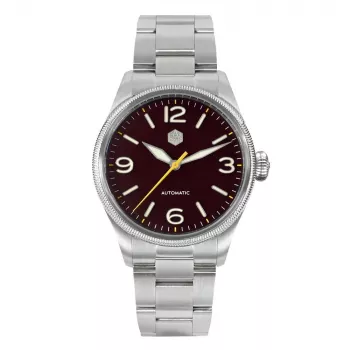
A compact pilot-inspired automatic watch built for everyday wear, this 38.5mm design blends vintage-leaning proportions with modern practicality. The coin-edge bezel brings classic instrument-style texture, while a sapphire crystal adds confidence against the scuffs that come from desks, keys, and busy weekends. The result is a wearable tool-watch look that doesn’t feel oversized or costume-like—just clean, legible, and easy to live with. For more guidance, see Early pilot’s watches – Time Transformed.
Pilot-style watches are loved for straightforward styling: high legibility, purposeful details, and a dial layout that stays readable at a glance. The coin-edge bezel reinforces that “instrument” vibe with tactile ridges that look at home on aviation-inspired designs, and it adds a bit of visual depth without cluttering the dial. For further reading, see San Martin San Martin Carved Coin Bezel Retro Pilot SN033.
Going smaller with a 38.5mm pilot watch can be a sweet spot for many wrists. It tends to wear with less bulk, slides under jacket cuffs more easily, and still delivers presence thanks to the bezel texture and the strong, utilitarian styling. If comfort is a priority, it’s worth paying attention not only to case diameter but also to lug-to-lug length and strap thickness—those factors can make a watch feel either perfectly balanced or awkwardly long on the wrist.
Retro proportions also play nicely with different straps. Leather leans classic and slightly refined, canvas pushes the tool aesthetic, and a bracelet (when offered) can add weight and a more “daily uniform” feel.
Sapphire crystal is prized because it’s highly scratch resistant compared with common mineral crystals. Sapphire is a form of corundum, a material known for its hardness and durability in watch applications, helping preserve a clearer view of the dial over time (see Encyclopaedia Britannica’s overview of corundum).
In real-world use, that scratch resistance matters most for the small stuff: desk contact, brushing against door frames, or sharing a pocket with keys for a moment. Many sapphire crystals also come with anti-reflective coating (depending on the model configuration), which can improve legibility in bright light by cutting glare. While sapphire is tough against scratches, sharp impacts can still chip it—so durability is excellent, but not a license to be rough.
An automatic watch winds itself through a rotor that moves as you wear it, storing energy in the mainspring. If it’s worn regularly, it will generally keep running without any extra effort beyond normal time/date adjustments.
If the watch sits off-wrist for long enough to exhaust its power reserve, it will stop. That’s normal: you’ll just hand-wind (if supported), set the time, and reset the date as needed. Mechanical accuracy varies by movement and wearing habits, and consistent use plus proper servicing can help keep performance stable over the years. If you rotate watches frequently, a watch winder can reduce how often you need to reset—though it’s optional, not required.
Use this checklist to confirm the configuration and fit preferences before purchase—especially water resistance and strap style.
| Feature | What to Look For | Why It Matters |
|---|---|---|
| Case size | 38.5mm | Balanced presence; suits many wrists without feeling oversized |
| Crystal | Sapphire crystal | Better scratch resistance for daily wear |
| Bezel | Coin-edge styling | Classic texture and pilot-inspired design language |
| Movement | Automatic (mechanical) | No battery; mechanical feel and ownership experience |
| Water resistance | Rated level on product page | Guides safe use around rain, handwashing, swimming, or none |
For most daily wear, sapphire is better at resisting scratches than mineral crystal, helping the dial stay clearer over time. The main trade-off is that sapphire can still chip if hit sharply, so it’s durable but not impact-proof.
An automatic watch winds via a rotor that moves with your wrist, then runs on stored power for its power-reserve period. If it stops after sitting, you’ll simply wind it (if supported) and reset the time/date; a watch winder is optional for convenience.
A coin-edge bezel adds tactile grip and a more traditional instrument-style feel, and it can visually frame the dial in a crisp, classic way. Depending on the specific model, it may be decorative rather than a functional timing bezel.


Leave a comment