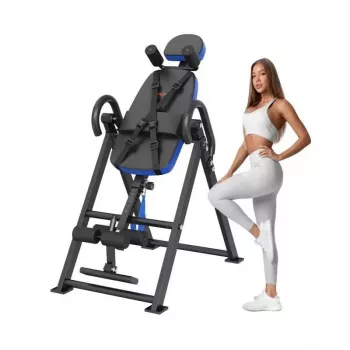
A heavy duty inversion table is built for steadier support, smoother angle control, and a more secure feel during decompression sessions. Compared with lighter frames, the “heavy duty” focus is usually on rigidity, a broader base, and confidence-inspiring ankle/foot restraints—especially helpful when transitioning in and out of inversion. Used thoughtfully, an inversion table can fit into routines for temporary back tension relief, stretching, and recovery after long days of sitting or training.
At its core, an inversion table supports controlled, head-down positioning so the body can lengthen under its own weight. The goal isn’t to “hang forever,” but to use a stable platform for gentle traction-style relief and targeted stretching.
Results vary, and inversion isn’t a cure for underlying conditions—but many people like how it feels during and shortly after a session. The most common “wins” are comfort, mobility, and relaxation.
For a balanced perspective on inversion therapy and safety considerations, see the Cleveland Clinic overview of inversion therapy. For broader self-care guidance for common back pain, the Mayo Clinic back pain self-care page is a helpful reference.
Inversion changes blood pressure dynamics and increases pressure in the head and eyes. That’s why a “strong table” isn’t the only safety factor—personal health status matters just as much.
A broader footprint and solid steel construction can reduce wobble during mounting, transitions, and partial inversion holds. “Heavier” tables often feel more planted, but always check manufacturer specs for safe use.
Look for multi-position settings or a strap system that allows small increments. This helps avoid jumping from upright to deep angles too quickly, which can feel intense and increase head pressure.
Padded rollers should feel secure without creating sharp pressure points. Micro-adjustability (fine spacing changes at the ankle lock) can make the difference between “tolerable” and “repeatable,” especially for daily sessions.
Thicker padding and supportive contours can reduce discomfort during longer sessions. The best feel is usually firm-but-cushioned: soft enough for comfort, structured enough to avoid bottoming out.
Easy height settings with readable markings matter when more than one person uses the table. If space is tight, check whether it folds flat, includes transport wheels, and fits a closet or corner footprint.
Use the list below as a fast comparison tool before buying. Follow the manufacturer’s height and weight limits strictly, and treat safety components (locks, straps, pins) as non-negotiable.
| Feature | Why it matters | What to look for |
|---|---|---|
| Weight capacity | Ensures safe support under load | A limit that comfortably exceeds body weight; sturdy base |
| Angle settings | Controls progression and comfort | Multiple increments; reliable locking/strap system |
| Ankle support | Reduces pressure and improves confidence | Thick rollers; adjustable locking; stable footplate |
| Backrest padding | Comfort during longer sessions | Firm-but-cushioned pad; supportive shape |
| Stability | Less wobble during mounting and inversion | Wide footprint; non-slip feet; quality joints |
| Storage | Fits home space constraints | Folds flat; transport wheels; compact profile |
Start with 1–2 minutes at a mild angle and increase gradually if comfortable. Many routines stay around 3–5 minutes per set, focusing on relaxed breathing and a slow, controlled return upright.
Not usually—many people feel relief at partial angles (about 15–45 degrees). Comfort and safety come first, and deeper angles can increase head pressure or discomfort for some users.
Avoid use with glaucoma or eye pressure issues, uncontrolled high blood pressure, certain heart conditions, pregnancy, and other conditions where head-down positioning is unsafe. When unsure, medical clearance is the safest next step.



Leave a comment