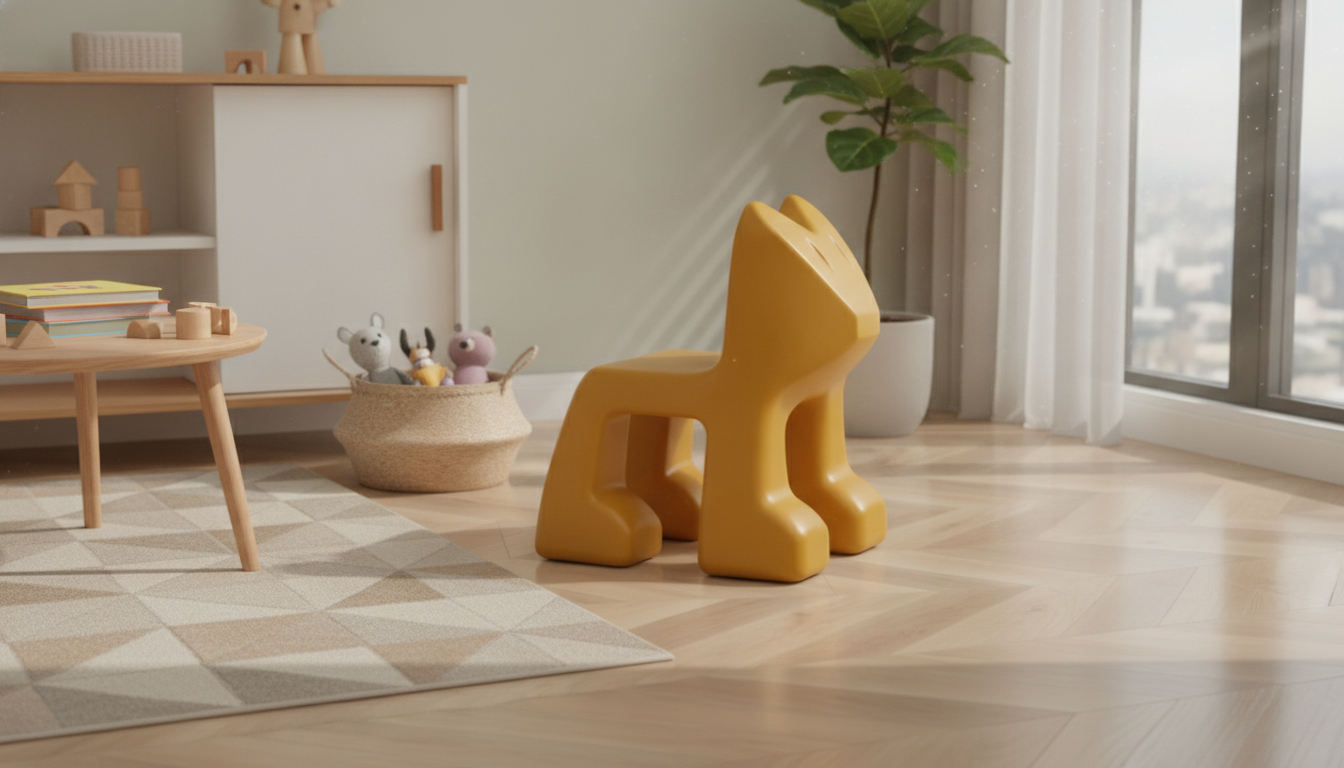
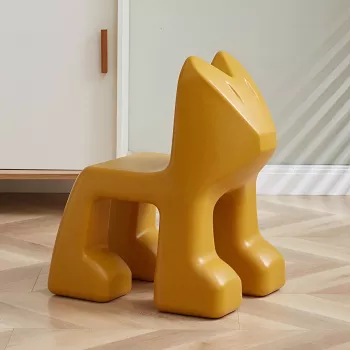
A low kids’ stool can make everyday routines easier: putting on shoes, reaching a sink with less help, or setting up a calm reading corner. This minimalist modern plastic seat adds a playful cartoon animal look while staying compact for bedrooms, playrooms, and small spaces. It’s the kind of small “helper” furniture that quietly supports independence—without taking over the room.
Kids’ spaces work best when children can do more on their own, safely and comfortably. A low stool creates a reliable place to sit, pause, and focus—whether that’s tying shoes or flipping through a picture book.
For families in apartments or shared homes, a small seat can also reduce the “where should they sit?” shuffle—especially during quick routines when a child needs a predictable spot.
Kid furniture doesn’t have to clash with the rest of the home. A minimalist silhouette keeps the stool looking tidy, while the cartoon animal styling adds just enough fun to feel inviting for toddlers and preschoolers.
That balance matters: when a stool looks “at home” in the room, it’s more likely to stay out and be used daily—rather than getting tucked away in a closet.
Plastic can be a practical choice for children’s seating because real life happens fast—snacks, markers, paint water, and sticky hands included. A wipe-clean surface helps keep the stool looking fresh without turning cleanup into a project.
As with any kids’ furniture, stability and placement matter. If a stool is being used near other furniture, it’s worth reviewing general home safety guidance like the CPSC’s information on tip-over risks and safer room setups: CPSC Tip-Over and Furniture Safety.
A low stool earns its keep when it can move with your child’s day. Many families end up rotating it between a few “hot spots” depending on routines.
For broader kid-proofing tips—especially as toddlers start climbing and testing boundaries—healthy, practical guidance is available at HealthyChildren.org (AAP) – Home Safety.
A stool should feel steady and predictable. Kids tend to shift positions, spin, scoot, and hop on and off—so small design details can make a big difference.
| Need | Why It Matters | Good Fit If |
|---|---|---|
| Stable base | Reduces tipping during shifting, leaning, or quick sit-downs | The stool sits flat and doesn’t wobble on your flooring |
| Easy to wipe clean | Helps with spills, crafts, and bathroom use | A damp cloth removes marks without special cleaners |
| Kid-friendly size | Encourages independent sitting and moving the stool safely | A child can lift and reposition it without dragging |
| Smooth edges | Less risk during energetic play | No sharp corners where knees and shins bump |
| Room-friendly design | Stays out without visual clutter | Minimal shape with a fun animal detail |
A low stool is commonly useful from toddler years through early elementary, as long as the child can sit with steady balance and place feet close to the floor. If it’s used for occasional stepping, closer supervision is important—especially for younger toddlers.
Wipe with a soft cloth using mild soap and water, then wipe again with clean water and dry. Avoid abrasive scrubbers or strong solvents that can scratch or dull the plastic, and follow any care guidance included with the product.
It may work for very low tasks only if the stool is stable and intended to support that kind of use, but purpose-built step stools are safer for climbing. Toddlers should always be supervised, and the stool should be used on a flat, non-slippery surface.

Leave a comment