
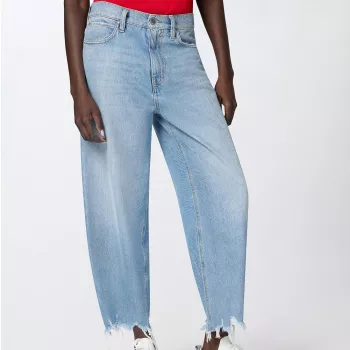
Pinko’s straight-fit jeans with a ripped hem combine a clean, balanced leg line with a lived-in finish that reads deliberate—not messy. The straight silhouette keeps things timeless, while the raw, distressed hem adds texture and draws the eye downward, making footwear and styling choices feel more “styled” with minimal effort. Below is what to expect from the shape and fabric feel, how to make the hem detail look sharp, and how to care for distressed denim so it keeps its character without getting out of control.
Shop the featured denim here: Pinko Straight-Fit Ripped Hem Jeans.
Straight-fit jeans tend to sit comfortably without clinging, often feeling a bit more structured than stretch-heavy denim. The best fit looks clean through the thigh and knee without stress lines, then falls straight to the ankle. Because the hem is distressed, the length can appear slightly shorter and can visually “break” the leg line—an easy fix is choosing footwear that adds a touch of height or keeping the hem positioned just above the top of your shoe.
If you’re between sizes, prioritize waistband comfort when seated and check the upper thigh. A waistband that feels fine standing but digs in when sitting usually means sizing up and using a belt. For a sharper overall look, aim for a length that lands just at or slightly above your shoe so the rip detail reads intentional rather than accidental.
| Area | What to Look For | Easy Fix |
|---|---|---|
| Waist | Secure without digging in | Try the next size up and belt it for comfort |
| Hip/Thigh | Room to move without pulling at seams | Choose a more relaxed size if stress lines appear |
| Rise | Comfort when sitting; no gaping in back | Adjust size based on waistband fit first |
| Length/Hem | Ripped edge sits where you want attention | Cuff once for a slightly shorter, neater break |
For a dressier, elongating option, pair the denim with: Women’s Retro Brogue Leather Pumps with Thick Heels.
For symbol-based care instructions, a helpful reference point is the ISO overview of textile care symbols: Textile Care Symbols (ISO 3758 overview).
The Pinko Straight-Fit Ripped Hem Jeans are listed at $319.95 USD and currently show as in stock. This is a premium denim purchase where value comes from the silhouette, finishing, and brand-led detailing—especially the intentional hem distressing that changes the entire feel of a “simple jeans” outfit.
When pairing with higher-end footwear or styling for content, keep endorsements and claims clear and truthful. The FTC’s guidance is a useful reference for disclosure and transparency standards: FTC Guides Concerning the Use of Endorsements and Testimonials in Advertising.
Some gradual fraying is normal and part of the design. Gentle washing, turning them inside out, air drying, and trimming loose threads (instead of pulling) helps keep the hem looking intentional.
Balanced proportions work best: fitted knits, tucked button-downs, cropped jackets, and structured blazers. The straight leg supports both relaxed tops and polished layers without looking extreme.
A slight break or a hem that sits just above the shoe usually looks cleanest, especially when the hem is distressed and meant to be seen. If the length feels too long, a single cuff can create a neater, more controlled break.


Leave a comment