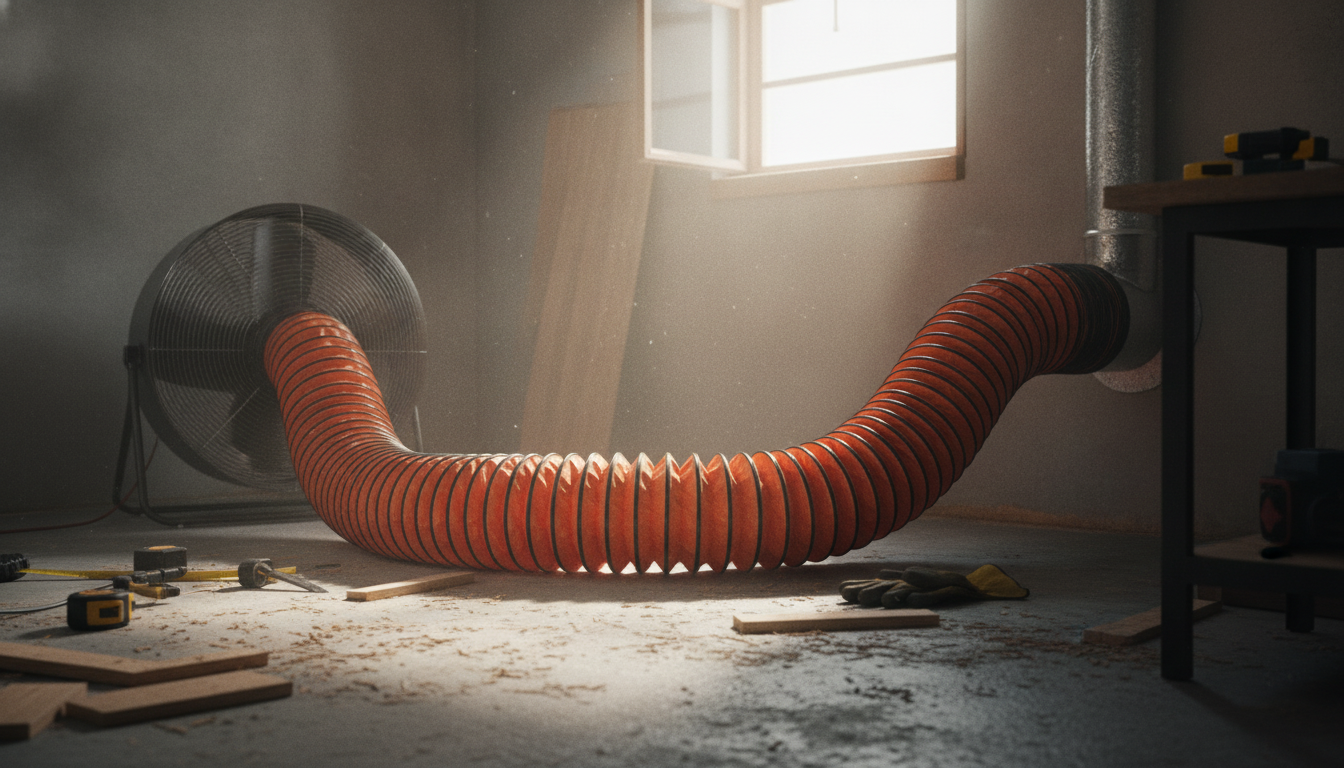
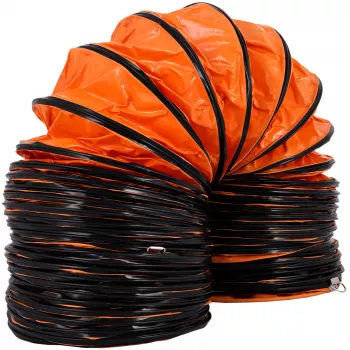
A long, flexible duct run can make the difference between a noisy, inefficient setup and a clean exhaust path that actually moves air where it needs to go. This 32-foot flexible PVC ventilation duct hose is sized for 12-inch exhaust fans and designed for practical routing around corners, obstacles, and temporary or seasonal layouts. When you need reach without piecing together multiple short sections, a single continuous run can help reduce leak points and simplify installation.
Flexible PVC ducting is a practical choice when rigid pipe would be difficult to route or overkill for the job. A 32-foot length is especially useful when you’re bridging distance and still want the freedom to reposition equipment.
For broader guidance on ventilation and indoor air quality fundamentals, refer to resources like ASHRAE’s ventilation and IAQ information and OSHA’s ventilation overview.
Getting good performance from flexible ducting is mostly about fit and routing. A secure connection at both ends, plus a path that avoids crushing and sharp kinks, typically matters more than anything else.
| Item to Verify | What to Look For | Why It Matters |
|---|---|---|
| Fan outlet size | 12-inch collar/outlet | Ensures proper seal and stable mounting |
| Required run length | Shortest workable path | Shorter runs usually move more air |
| Routing obstacles | Bends, turns, elevation changes | Each bend increases resistance |
| Connection method | Clamp/coupler/tape as needed | Helps prevent leaks and rattling |
A longer duct length is ideal when your fan can’t be placed right next to the exit point, or when you want a more controlled route for air, odor, humidity, dust, or heat. It also helps when your setup changes frequently and you don’t want to rebuild ductwork every time.
If the goal is healthier indoor air overall (beyond just moving air from point A to point B), the EPA’s guide to air cleaners in the home is a helpful companion resource—especially when ventilation is paired with filtration.
Flexible ducting is forgiving, but it performs best when it’s treated like a real airflow path—not a hose you can crush behind equipment. A bit of planning up front can prevent noisy vibration, leaks, and disappointing airflow.
Practical tip: if you hear rattling, vibration, or flapping, it often points to a loose connection, a sharp bend, or a sagging section that’s “pulsing” under airflow.
Longer ducting can work well, but every extra foot and every bend adds resistance. The best results usually come from using only as much duct as needed and keeping the interior as open as possible.
If airflow seems weak after installation, start with the simplest checks: look for crushed sections, tighten clamps, reduce bends where possible, and confirm the discharge point isn’t partially blocked.
It can, but longer ducting and sharp bends add resistance and can reduce airflow. Performance depends on fan power, how many turns the run has, and whether the duct is kept open and well sealed—use the shortest workable path with gentle curves for best results.
Match the duct to a true 12-inch outlet collar, slide the duct over the fan’s outlet, and secure it with a correctly sized clamp or coupler. After turning the fan on, check around the connection for leaks and tighten or reseal if needed.
Avoid kinks, crushed or flattened sections, tight 90-degree bends, long sagging spans, and poorly sealed joints. Supporting the duct and keeping bends smooth helps maintain airflow and reduces rattling and leakage.





Leave a comment