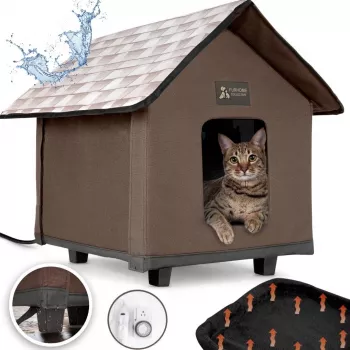
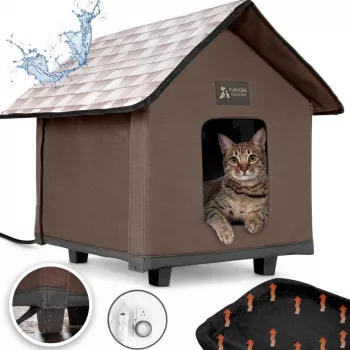
When temperatures drop, an outdoor cat needs a place to settle and a person keeping an eye on its well-being. Our Heated Outdoor Cat House offers a designated resting spot, but choosing a location and checking it regularly are just as important as setting it out.
Whether you care for your own outdoor cat or help a community cat, plan for changing weather, access to food and water, and a safer indoor option when conditions become severe.
A familiar resting spot can give a cat somewhere to return to between meals and visits. In colder weather, placing that spot in a quiet, sheltered area may also make it easier for you to keep track of its condition and the cat’s routine.
Our Heated Outdoor Cat House is available for $82.97. Visit the product page for current availability and details before deciding whether it suits your cat and the location you have in mind. A heated house should be part of a broader care plan, not a promise of protection in every kind of weather.
Our team recommends thinking about your daily access to the spot, too. If you can reach it easily, you’re more likely to notice a blocked entrance, dampness, or a change in the cat’s behavior.
Look for a sheltered location away from heavy foot traffic and prevailing wind. A quiet area near a structure may offer some protection from direct exposure, provided the cat can approach and leave without difficulty. Choose a spot you can reach safely for regular inspections.
Keep the entrance clear of leaves, snow, and other debris. After rain, snow, or a storm, check both the house and the surrounding area. Weather can shift objects or create puddles where there were none before, so don’t assume yesterday’s location is still suitable today.
Follow the product instructions for placement and electrical use. Never assume an extension cord or an exposed outlet is suitable. Use the equipment as directed and protect electrical connections according to the manufacturer’s instructions.
| Consideration | What to Check |
|---|---|
| Shelter | Choose a location protected from direct exposure where possible. |
| Access | Keep the entrance unobstructed and easy for the cat to reach. |
| Electrical safety | Use the equipment as directed and protect connections according to the instructions. |
| Routine care | Check the resting area regularly for dampness and debris. |
If the area becomes difficult to reach or maintain, reassess the placement rather than waiting for the weather to improve. Keep the manufacturer’s instructions handy so you can refer to them when conditions change.
A new house can take time to become familiar. Place it in a quiet area the cat already knows, then let the cat investigate at its own pace. Avoid forcing the cat inside; instead, give it room to approach and leave comfortably.
Watch from a respectful distance to see whether the cat visits or uses the house. If it avoids the area, consider whether nearby activity, wind, or an obstructed approach could be discouraging it. Make any placement changes in keeping with the product instructions.
Before adding bedding or covering any heating component, consult the manufacturer’s guidance. Materials that seem comfortable to you may not be appropriate for the equipment, so don’t make additions unless the instructions allow them.
Food and fresh water remain essential when the weather turns cold. Make both accessible and check them frequently in freezing conditions; water can freeze, and food can be affected by weather or other animals. Refresh them as needed and keep the feeding area reasonably clean.
Pay attention to the cat’s usual behavior and appearance. If the cat seems unusually weak, lethargic, uncomfortable, or otherwise unwell, contact a veterinarian for guidance. A community cat may be difficult to approach, so plan a safe way to seek help rather than trying to handle an unfamiliar animal without care.
During severe weather, consider a safe indoor space when possible. A heated house does not replace monitoring or guarantee safety through every storm or temperature. The ASPCA’s cold-weather safety tips and the AVMA’s winter weather pet safety guidance offer additional information for planning ahead.
Before purchasing, consider where you’ll place the house, how you’ll check it, and whether you can follow its electrical instructions at that location. Visit our Heated Outdoor Cat House page to review the details and decide if it fits your care routine.
If you’re also updating an indoor space, you can browse our Golden Ceramic Round Bathroom Sink separately from your cat’s outdoor setup.
Choose a sheltered, quiet location away from prevailing wind and heavy foot traffic, with a clear entrance the cat can reach easily. Follow the product’s placement and electrical instructions.
Don’t assume it is suitable for every condition. Follow the product instructions, inspect the location regularly, and consider a safe indoor space for the cat during severe weather.
Check the manufacturer’s instructions before adding bedding. Never cover a heating component unless the manufacturer permits it.

Leave a comment